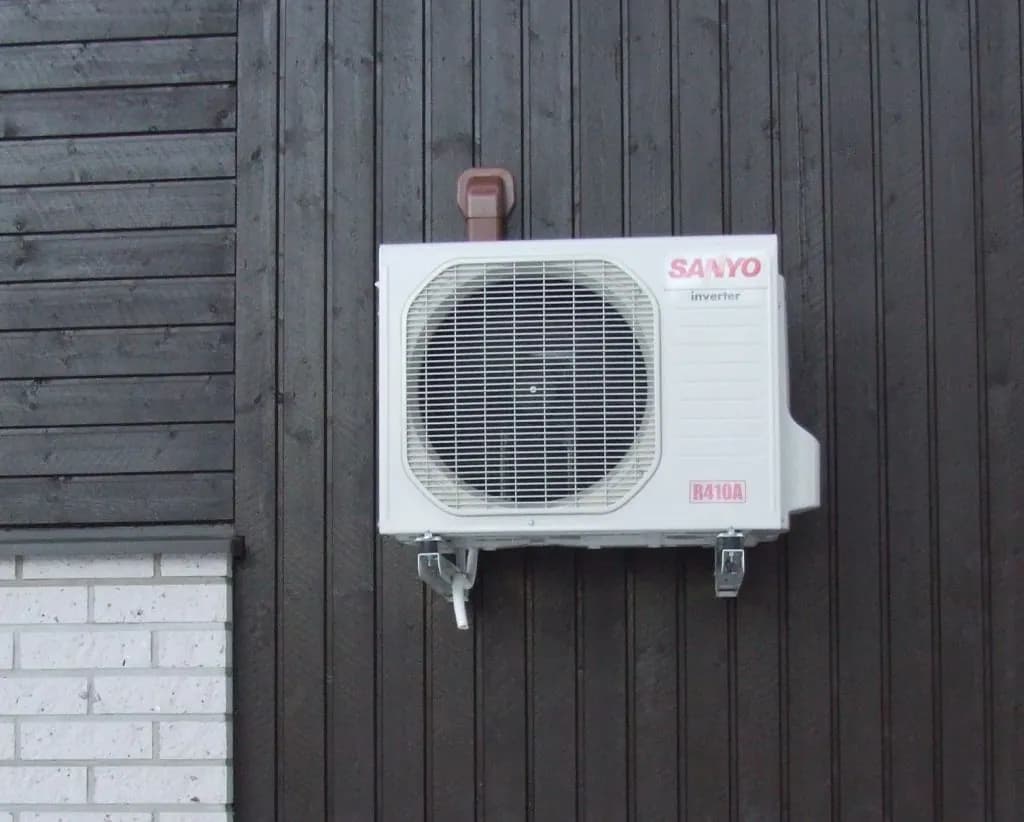
Photo credit
Photo: Piisamson, “Sanyo SAP-KRV-93EHN”, CC BY-SA 3.0, via Wikimedia Commons. Resized and converted to WebP; shown cropped.
Heating & cooling
Furnaces, boilers, heat pumps, air conditioners, ductwork, thermostats.
Is it urgent?
CO alarm or a gas smell? Get everyone outside, then call 911 or your gas utility from outside.
Emergency: call now
Within a day or two
Show the full list
Safety first: If a carbon monoxide alarm is sounding, or you smell gas (a rotten-egg smell), get everyone outside first, then call 911 or your gas utility's emergency line from outside. Do not flip switches or try to fix it yourself.
Emergency: call now
- A carbon monoxide alarm, a gas or rotten-egg smell, a burning or electrical smell, or sparks or smoke from a unit
- No heat in freezing weather, or no cooling in dangerous heat, especially with infants, older adults or anyone with medical needs at home
- Active water leaks from the unit causing property damage, such as through a ceiling or into a basement
Within a day or two
- A system that runs but is weak or on-and-off: warm air from the AC, weak heat, short cycling
- A slow drip of water, or unusual noises while the system still works
Can wait: schedule it
- Maintenance tune-ups, filter changes and thermostat upgrades
- Quotes for a new system or a replacement, duct cleaning and air-quality add-ons
This is general guidance, not a diagnosis. If anyone is in danger, call 911 first.
What's on an HVAC quote
EquipmentAsk: brand, model, size, efficiency
The furnace, air conditioner, heat pump or air handler, listed by brand, model and size. Two quotes are only comparable when they name the same type, efficiency and size.
Labor & installationAsk: which connections are included?
The crew's time to remove the old system and install the new one, including the connections to ductwork, gas, electrical and drains.
Ducts & line changesAsk: which ducts or lines change?
Repairs to ducts or the refrigerant lines between the indoor and outdoor units, plus pads, supports and thermostat wiring if needed.
ControlsAsk: thermostat included or optional?
The thermostat and any smart controls, and whether they are included or optional.
Permit & inspectionAsk: who pulls the permit?
Often its own line. The contractor normally pulls the permit.
Removal & refrigerantAsk: who recovers the old refrigerant?
Hauling away the old equipment. Old refrigerant must be recovered, not released, so ask who handles it.
WarrantyAsk: parts vs labor, registration?
The manufacturer's parts warranty and any labor warranty from the contractor. Ask which is which and what registration the manufacturer requires.
What a good estimate spells out9 things to look for
- The contractor's legal name, license number if one applies, and contact details, plus your name and address.
- What work is included, and what is not.
- The brand, model and size of major equipment and materials, not just standard or builder grade.
- Who pulls the permit and who pays for it and for inspections.
- Cleanup, and what happens to the old materials.
- A start date and a realistic finish date, and what happens if the schedule slips.
- Warranty terms: what is covered, for how long and who honors it.
- When and how you pay, tied to finished stages of work rather than just dates.
- How changes are handled: a written price for any change before the work happens.
Red flags
4 of 11Size not explained
Ask for a room-by-room load calculation.
Told it's cracked, not shown
Get a written diagnosis you can take elsewhere.
Pressure to sign today
A fair quote is still fair tomorrow.
Refrigerant added again and again
Ask them to find the leak.
7 more red flags
Pushing a full replacement only because your system uses the older refrigerant.
Existing systems that use it can generally still be serviced.
No written quote, or a quote that is a single total with no detail about what is included.
A large payment up front, or a request for cash only.
Some states limit how much a contractor can ask for before work starts.
A license number that does not check out.
Where your state licenses this trade, look the number up yourself on the state licensing board's site.
No proof of insurance.
Ask for a certificate sent to you directly by the insurer or the agent.
A price far below every other quote, followed by extras once the work has started.
Someone who knocks on your door uninvited, or who will not give recent local references.
Where homeowners say it goes wrong
- The house is uncomfortable now and they want someone today, not next week
- They got a surprise huge repair quote and don't trust whether they're being upsold
- Their unit died in extreme weather and they fear an expensive full replacement
- They're confused by the 2026 refrigerant changes and worried their old system is obsolete
- Past contractors no-showed or gave vague arrival windows
Questions to ask
How did you size this system (a load calculation, or just matching the old one), and will you check the ductwork?
What are the exact make, model, efficiency rating and refrigerant of what you are quoting?
Is the permit and inspection included, and can I see a written price for the repair option as well as the replacement?
2 more questions
Are you licensed where this work requires it, and insured? Can I see the license number and a certificate of insurance sent to me by your insurer?
What exactly does the warranty cover, for how long, and who honors it (you, the manufacturer, or both)? Will you put it in writing?
More about heating & cooling
Furnace, boiler or heat pump?A drawing, one part at a time
Heats air; a blower pushes it through ducts to the vents. Cooling needs a separate AC coil on the same ducts.
- Fuel: gas, oil, propane or electric.
- Ducts must be sealed and the right size.
Drawing made for this site · simplified, not to scale
Know what you're looking at2 photos
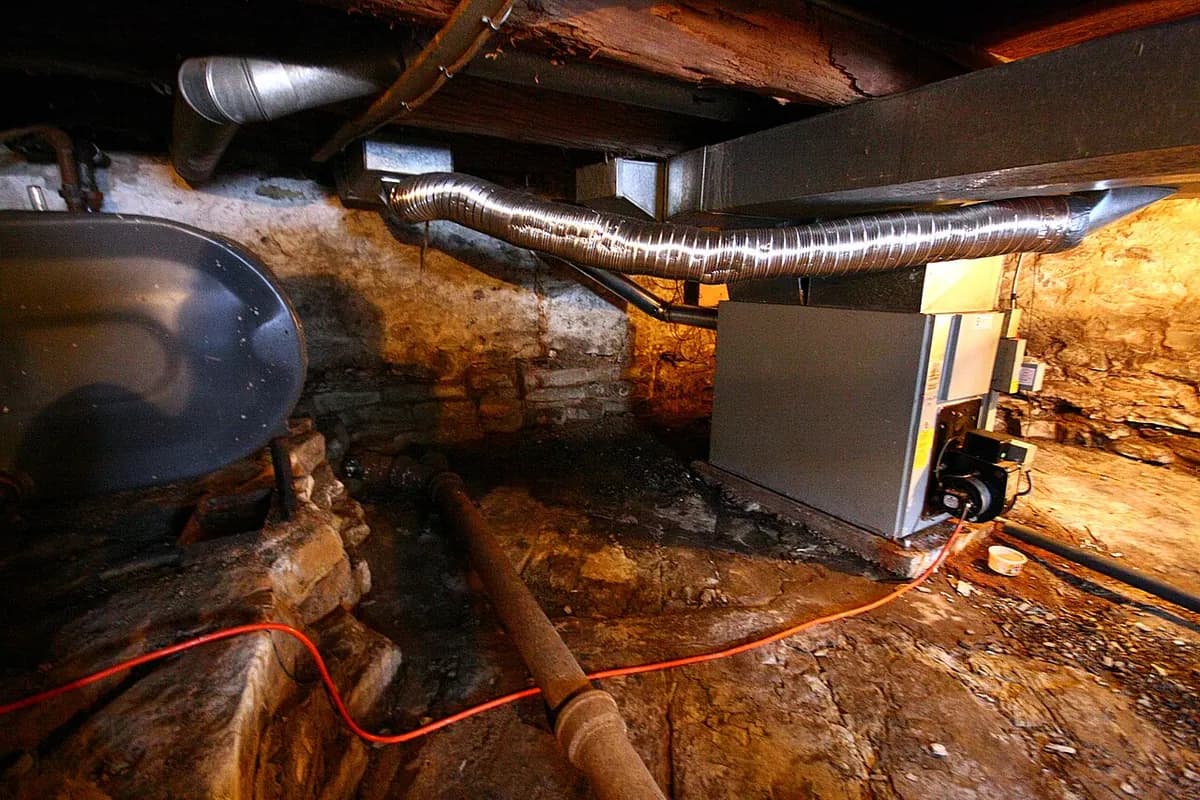
Photo credit
Photo: Martin Cathrae from Charlottetown, PE, Canada, “Basement”, CC BY-SA 2.0, via Wikimedia Commons. Resized and converted to WebP; shown cropped.
Ducts
Ask if duct sealing is quoted
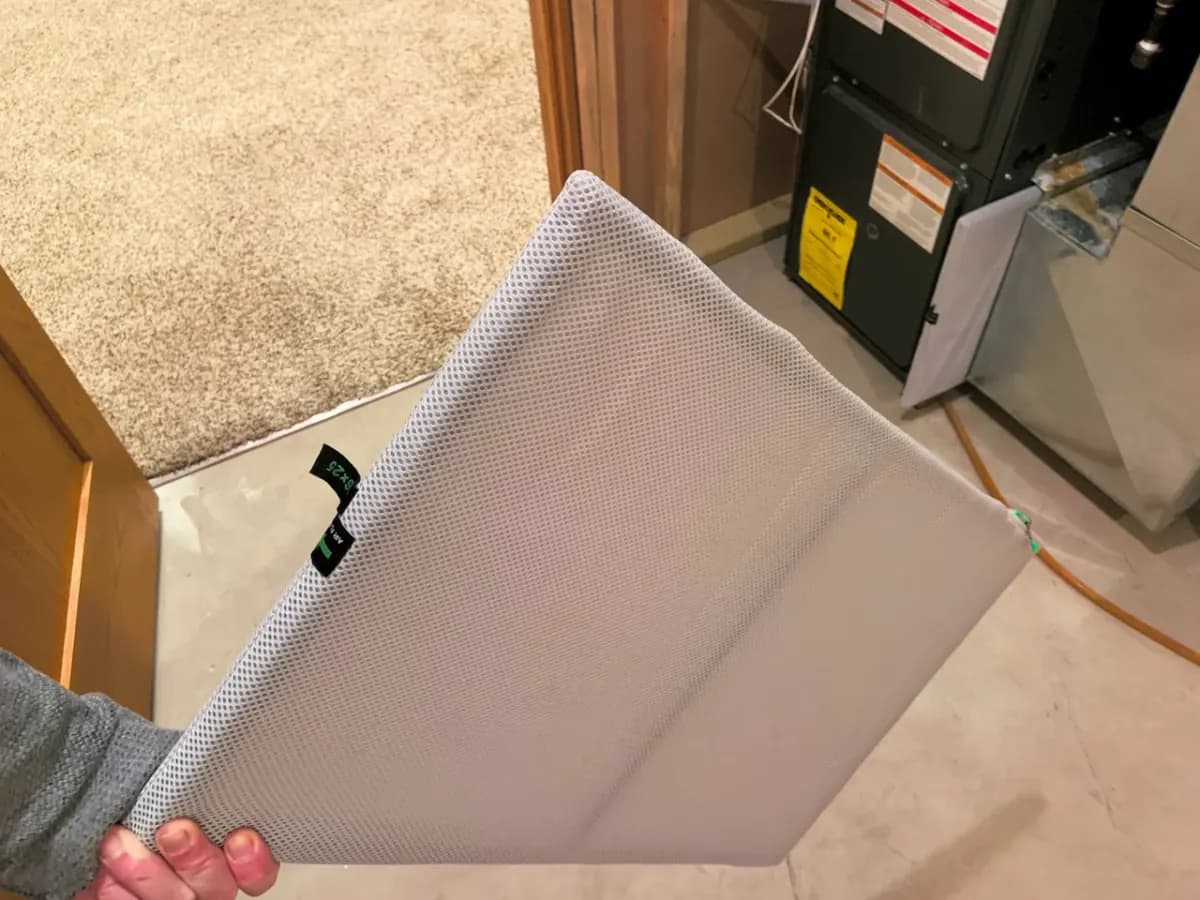
Photo credit
Photo: Wikideas1, “HVAC air filter”, CC0 1.0, via Wikimedia Commons. Resized and converted to WebP; shown cropped.
Furnace filter
Check it every month or two
Permit or not?Who pulls it, and what to check first
Commonly permitted
- Furnace or AC swap
- Heat pump
- Gas or electrical work
- Refrigerant lines
Usually not
- Thermostat swap
- Filter change
Your building department decides. If a contractor asks you to pull the permit in your own name, ask why.
Work like this usually needs a permit.
Replacing a furnace, air conditioner or heat pump, or changing gas, electrical or refrigerant connections, is the kind of work building departments commonly permit and inspect. Swapping a thermostat or a filter usually is not.
- Your building department decides what applies at your address. Rules differ by city and county, and HOA, condo or historic-district rules can add more.
- Ask who pulls the permit. Normally the licensed contractor does and the price includes it. If a contractor asks you to pull it in your own name, ask why: it can shift responsibility for the work to you.
- If you are unsure, call your local building department before you sign. Unpermitted work can cause problems with insurance and when you sell.
Words you'll seeSEER2 · HSPF2 · AFUE
SEER2
A cooling-efficiency score for central air conditioners and heat pumps. A higher number means less electricity for the same cooling. Ask for the score of the exact model quoted, not just the brand.
What this trade covers15 kinds of jobs
- Central AC repair and recharge
- Furnace repair and ignition/heat-exchanger service
- Heat pump installation and replacement
- AC condenser/compressor replacement
- Annual maintenance tune-ups (cooling and heating)
- Ductwork inspection, sealing, and replacement
- Thermostat installation (smart/programmable)
- Indoor air quality: filters, UV lights, air purifiers, humidifiers
- Mini-split / ductless system install and service
- Refrigerant leak detection and repair (R-454B/R-32 conversions)
- Emergency no-heat / no-cool service calls
- Boiler and hydronic heating service
- Blower motor and capacitor replacement
- Duct cleaning and airflow balancing
- System efficiency audits and load calculations
How people describe it when it can't wait
- “My carbon monoxide detector is going off and the furnace just kicked on”
- “I smell gas / rotten eggs near the furnace”
- “It's 95 out and my AC is completely dead, my elderly mother is here”
- “No heat at all and it's below freezing tonight, I have a newborn”
- “There's water pouring out of the unit into my ceiling/basement”
- “I see sparks coming from the outside unit”
- “There's a burning smell coming from the vents when the heat runs”
- “The furnace is making a loud banging/booming sound when it lights”
- “The AC outdoor unit is buzzing loudly and won't shut off”
- “My pipes are going to freeze, the heat has been out for hours”
When it can be planned
- “I'd like a quote on replacing my old AC unit”
- “Can I schedule my annual furnace tune-up before winter?”
- “My energy bills are high, can someone look at my system?”
- “I want to switch to a heat pump and ask about the tax credit”
- “Can you install a smart thermostat for me?”
- “One room is always hotter than the rest of the house”
- “My filter needs changing and I want a maintenance plan”
- “Interested in a ductless mini-split for my finished garage”
Rebates and creditsPrograms for your ZIP, and where to look
Rebates and credits change often and differ by state, utility and sometimes county.
- Start with your state energy office and the ENERGY STAR rebate finder.ENERGY STAR rebate finder (opens in a new tab)
- The federal 25C and 25D credits ended for property placed in service after 2025-12-31 (IRS: 25C, 25D). Do not count on them for new work, and ask a tax professional about your situation.25C (opens in a new tab)25D (opens in a new tab)
- Heat pumps, heat pump water heaters and high-efficiency equipment are the items that most often have state or utility rebates.
- Programs often have conditions: a specific equipment rating, an approved installer, or approval before you buy. Confirm the rules before you sign, not after.
Paying for itBefore you finance anything
Most home projects can be paid in cash or financed. A few basics before you sign anything:
- Ask for the cash price and the financed price in writing, for the same scope of work. They can differ, because a financing fee (sometimes called a dealer fee) may be built into the financed price.
- Compare the total you will pay over the whole loan, not just the monthly payment.
- Read the fine print on same-as-cash and zero-interest offers, especially what happens if the balance is not paid in full by the end of the promotional period.
- PACE financing is repaid through your property tax bill and can place a lien on your home. Read the terms closely, and consider asking your mortgage servicer how it is treated, before you agree.
- Utility and state programs sometimes offer low-rate loans for efficiency work. Check yours before accepting the contractor's offer.
- Take loan paperwork home and read it. A sign-it-today loan is a reason to slow down.
There is more in the financing guide.financing guide
We are not a lender and do not arrange loans. Financing information here is general education; lenders decide terms.
What an expert knows9 topics, each note linked
Notes from public sources, each linked.
Types, pros, cons and lifespanGas or oil furnace · Furnace efficiency labels
- Gas or oil furnace: Heats air and sends it through ducts. ENERGY STAR furnaces use condensing technology, and sealed combustion (which draws outdoor air to the burner) is advised. Federal buyer guidance puts average furnace life at about 21 years.DOE FEMP: Purchasing Energy-Efficient Residential Furnaces (opens in a new tab)
- Furnace efficiency labels: AFUE rates how much fuel becomes heat. ENERGY STAR uses different labels for the south and the north because heating needs differ, so check which label fits your climate.ENERGY STAR: Furnaces (opens in a new tab)
- Boiler (hot water or steam): Heats water or makes steam for radiators or in-floor tubing. ENERGY STAR residential gas boilers need an AFUE of 90 or higher, and the most efficient ones condense flue gases and use sealed combustion. Federal guidance assumes about 20 years of life for a residential boiler.DOE FEMP: Purchasing Energy-Efficient Residential Gas Boilers (opens in a new tab)
- Boiler upkeep trade-off: Older hot-water systems can develop corrosion that clogs parts, so yearly service by a technician matters.DOE Building America: Energy Renovations, HVAC (guide for homeowners) (opens in a new tab)
- Central air conditioner: Cools through ducts. Federal guidance puts typical life near 18 years in hot-humid states, 24 in northern states and 25 in hot-dry areas. ENERGY STAR models need a SEER2 of 15.2 or higher.DOE FEMP: Purchasing Energy-Efficient Residential Central Air Conditioners (opens in a new tab)
- Air-source heat pump: One system heats and cools by moving heat in and out of the house, with no combustion in the home. Cold-climate certified models are tested down to 5°F, and a backup heat source is often paired with them for the coldest days.ENERGY STAR: Air-Source Heat Pumps (opens in a new tab)
- Heat pump lifespan: Federal guidance designs around about 15 years for an air-source heat pump. In cold climates it calls for models built to run at low outdoor temperatures and a thermostat made for heat pumps.DOE FEMP: Purchasing Energy-Efficient Residential Air-Source Heat Pumps (opens in a new tab)
- Ductless mini-split: An outdoor unit feeds one or more wall or ceiling units. It suits homes without ducts, older homes with radiators or baseboard heat, additions and problem rooms. Keep the outdoor unit away from roof runoff so ice does not form.ENERGY STAR: Ductless Heating and Cooling (opens in a new tab)
Sizing and choosingRight-size, not rule of thumb · Bigger is not better
- Right-size, not rule of thumb: Equipment should be sized from your home's actual characteristics, not a rule of thumb. An oversized unit cycles too often, which costs comfort and shortens its life.ENERGY STAR: HVAC Quality Installation (opens in a new tab)
- Bigger is not better: A contractor should size the system from the size of the house, insulation and windows. Ask to see how the number was reached.ENERGY STAR: 10 Tips for Hiring a Heating and Cooling Contractor (opens in a new tab)
- Manual J for heat pumps: Heat pumps and ductless systems should be sized with a Manual J load calculation. Both oversized and undersized units struggle to keep you comfortable.ENERGY STAR: Air-Source Heat Pumps (opens in a new tab)
- Fix the house first: Address major air leaks and duct problems before spending on new equipment.ENERGY STAR: Heat and Cool Efficiently (opens in a new tab)
- Check the ducts and airflow: Ask for a duct inspection and a leakage test. Poor airflow raises bills, adds moisture and shortens equipment life.ENERGY STAR: HVAC Quality Installation (opens in a new tab)
Maintenance by seasonMonthly in winter and summer · Spring (cooling tune-up)
- Monthly in winter and summer: Check the filter every month in heavy-use months and change it at least every 3 months.ENERGY STAR: Heat and Cool Efficiently (opens in a new tab)
- Spring (cooling tune-up): A pro should clean the evaporator and condenser coils, check the refrigerant level, check the condensate drain and clean the blower parts.ENERGY STAR: HVAC Maintenance Checklist (opens in a new tab)
- Fall (heating tune-up): A pro should inspect gas or oil connections, gas pressure, burner combustion and the heat exchanger, plus tighten electrical connections and lubricate moving parts.ENERGY STAR: HVAC Maintenance Checklist (opens in a new tab)
- All year (safety): Have fuel-burning appliances inspected every year. Put carbon monoxide alarms on every level and outside sleeping areas, and test them regularly.CPSC: Carbon Monoxide Information Center (opens in a new tab)
- Heat pumps and mini-splits: Clean the filters when they look dirty. Keep shrubs and clutter away from the outdoor unit so air can move freely.ENERGY STAR: Ductless Heating and Cooling (opens in a new tab)
Code and permit basicsPermits and inspections · Who may handle refrigerant
- Permits and inspections: Your contractor should check with the local building department about the codes that apply and get the needed permits. Depending on the job that can mean building, mechanical, electrical or plumbing permits. This is general information, not legal advice.DOE Building America: Energy Renovations, HVAC (guide for homeowners) (opens in a new tab)
- Who may handle refrigerant: Technicians who service air conditioning equipment must hold EPA Section 608 certification, and venting refrigerant is prohibited. You can confirm the certification before hiring.EPA: Section 608 Technician Certification (opens in a new tab)
- Refrigerant recovery at retirement: When old equipment is retired, the Clean Air Act requires certified technicians to recover the refrigerant instead of releasing it.DOE FEMP: Purchasing Energy-Efficient Residential Air-Source Heat Pumps (opens in a new tab)
- Installation standard: ANSI/ACCA 2015, the HVAC Quality Installation Specification, is the standard federal buyers are told to require. You can ask whether your installer follows it.DOE FEMP: Purchasing Energy-Efficient Residential Central Air Conditioners (opens in a new tab)
- Combustion safety after sealing: If you seal air leaks, have a professional test that furnaces and water heaters still vent correctly. A tighter house can cause backdrafting.ENERGY STAR: Identify Air Leak and Insulation Problems (opens in a new tab)
What moves the priceEfficiency level · Ductwork condition
- Efficiency level: Higher-efficiency equipment costs more up front, and how fast it pays back depends on your region. Ask the contractor to show savings calculations for your home.ENERGY STAR: 10 Tips for Hiring a Heating and Cooling Contractor (opens in a new tab)
- Ductwork condition: Leaky or undersized ducts add repair work to a replacement job. Properly sealed and insulated ducts improve how well any system works.ENERGY STAR: Heat and Cool Efficiently (opens in a new tab)
- House size, insulation, windows: These set how much equipment you need, and so what the job costs.ENERGY STAR: 10 Tips for Hiring a Heating and Cooling Contractor (opens in a new tab)
- Installation quality steps: Setting the refrigerant charge and testing ducts take extra time but reduce energy use and failure risk.ENERGY STAR: HVAC Quality Installation (opens in a new tab)
- Equipment type: A heat pump does both heating and cooling, and cold-climate models are built for lower outdoor temperatures. Compare itemized quotes for the same type and rating.ENERGY STAR: Air-Source Heat Pumps (opens in a new tab)
Common scamsSign today or lose the price · Door-knockers and leftover materials
- Sign today or lose the price: Be wary of a discount that only holds if you sign right away.FTC: How To Avoid Scams After Weather Emergencies and Natural Disasters (opens in a new tab)
- Door-knockers and leftover materials: Uninvited workers who say they are in the area, or offer leftover material from another job, are a common scam pattern.FTC: How To Avoid a Home Improvement Scam (opens in a new tab)
- Asked to pull the permit yourself: A contractor who asks you to get the building permit is a red flag. The contractor should normally handle it.FTC: How To Avoid a Home Improvement Scam (opens in a new tab)
- Odd ways to pay: Do not pay by wire, gift card, payment app, cryptocurrency or cash. Pay by credit card or check, and never pay the full job up front.FTC: How To Avoid Scams After Weather Emergencies and Natural Disasters (opens in a new tab)
- Unlicensed or uninsured: Claims that a license is not needed, or no proof of insurance, are warning signs. Confirm the license with your state or county and ask for proof of insurance.FTC: How To Avoid Scams After Weather Emergencies and Natural Disasters (opens in a new tab)
Ask for this in writingA written proposal · Itemized estimates
- A written proposal: Get a signed proposal before work starts that lists cost, model numbers, schedule and warranty details.ENERGY STAR: 10 Tips for Hiring a Heating and Cooling Contractor (opens in a new tab)
- Itemized estimates: Ask for itemized estimates and compare cost, efficiency and warranty, not just the total.ENERGY STAR: 10 Tips for Hiring a Heating and Cooling Contractor (opens in a new tab)
- Installation specifications: Ask for the installation specifications in writing, including the duct leakage test and the refrigerant charge test.ENERGY STAR: HVAC Quality Installation (opens in a new tab)
- Commissioning paperwork: Ask for documentation at the end showing the system was checked against its specifications.ENERGY STAR: HVAC Quality Installation (opens in a new tab)
- Contract basics: The contract should name the contractor with license number, the start and finish dates, the payment schedule, who gets the permits and your three-day cancellation right where it applies. Fill in every blank before signing.FTC: How To Avoid a Home Improvement Scam (opens in a new tab)
Repair or replaceAge is a prompt, not a verdict · Furnace yardstick
- Age is a prompt, not a verdict: A system over 10 years old deserves a professional evaluation. Fix major air leaks and duct problems before buying new equipment.ENERGY STAR: Heat and Cool Efficiently (opens in a new tab)
- Furnace yardstick: Federal guidance puts average furnace life at about 21 years. That is a useful yardstick when someone urges replacement of a younger unit.DOE FEMP: Purchasing Energy-Efficient Residential Furnaces (opens in a new tab)
- Replace when it is worn, inefficient or oversized: Older combustion furnaces ran at an AFUE of 56 to 70, and modern ones can reach 98. A contractor can judge whether yours is too old, worn out, inefficient or oversized.DOE Building America: Energy Renovations, HVAC (guide for homeowners) (opens in a new tab)
- A tune-up can decide it: A tune-up that checks the heat exchanger and flue gas spillage can show problems that justify replacement. Ask to be shown any problem and get it in writing.DOE Building America: Energy Renovations, HVAC (guide for homeowners) (opens in a new tab)
Questions to ask an expertHow did you size this? · How will you prove it was installed right?
- How did you size this? Will you do a load calculation based on my house, and will you test my ducts?ENERGY STAR: HVAC Quality Installation (opens in a new tab)
- How will you prove it was installed right? Will you test the refrigerant charge and airflow, and give me the paperwork?ENERGY STAR: HVAC Quality Installation (opens in a new tab)
- Is it ENERGY STAR certified, and what can I expect to save here? Ask the contractor to show the savings calculation for your home and your region.ENERGY STAR: 10 Tips for Hiring a Heating and Cooling Contractor (opens in a new tab)
- Can I call references and see your license and insurance? Ask about license and insurance rules in your state, then check them yourself.ENERGY STAR: 10 Tips for Hiring a Heating and Cooling Contractor (opens in a new tab)
- For a cold climate heat pump, what backup heat is included? Ask whether the model is certified for cold climates and how the backup heat is controlled.ENERGY STAR: Air-Source Heat Pumps (opens in a new tab)
General information, not legal, tax, engineering or insurance advice. Updated October 3, 2026. Photo credits