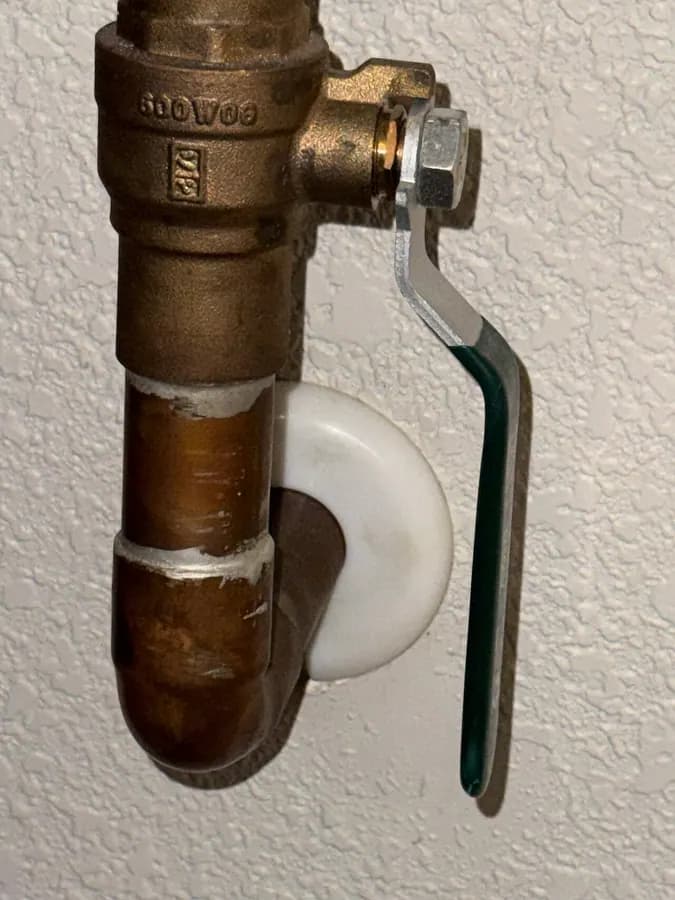
Photo credit
Photo: Tony Webster, “Water Pipe Shutoff Valve”, CC BY 2.0, via Wikimedia Commons. Resized and converted to WebP; shown cropped.
Do this first
Find your main water shut-off now
In a leak, turning the water off comes first.
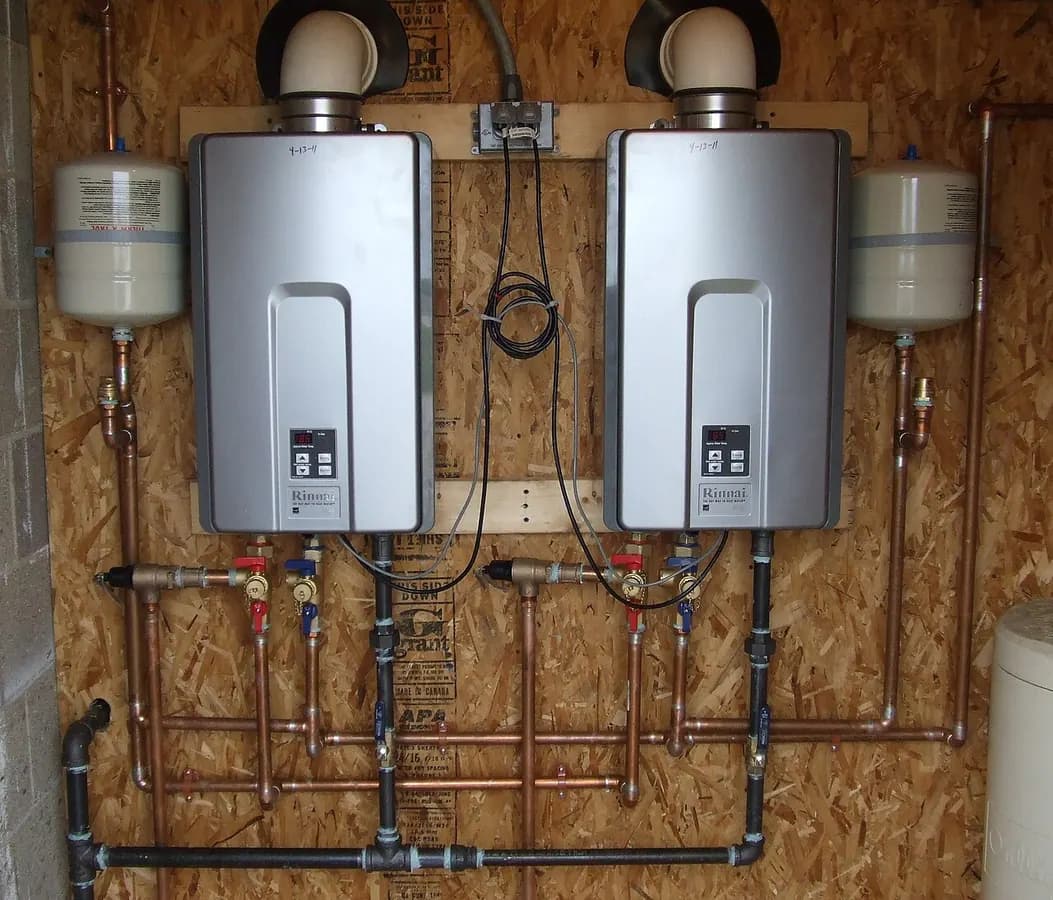
Photo credit
Photo: Behrat, “Rinnai water heaters”, CC BY-SA 3.0, via Wikimedia Commons. Resized and converted to WebP; shown cropped.
Leaks, water heaters, drains, pipes, fixtures, sump pumps.
Smell gas? Get everyone outside, then call your gas utility or 911 from outside.
Safety first: If you smell gas (a rotten-egg smell), get everyone outside and call your gas utility or 911 from outside. If water is flowing and you cannot stop it, close the main water shut-off. Learn where it is before you need it.
Emergency: call now
Within a day or two
Can wait: schedule it
This is general guidance, not a diagnosis. If anyone is in danger, call 911 first.
Photo credit
Photo: Tony Webster, “Water Pipe Shutoff Valve”, CC BY 2.0, via Wikimedia Commons. Resized and converted to WebP; shown cropped.
Do this first
In a leak, turning the water off comes first.
The water heater, toilet, faucet, pump or other item, listed by brand and model. For a water heater, the tank size and fuel type.
Pipe, fittings and valves. The pipe type matters (copper, PEX and so on), so ask what is being used.
Billed by the hour or as a flat price for the task. Ask which, and what the trip or diagnostic fee covers.
Cutting into drywall or a floor to reach pipes. Ask whether patching and painting are included or left to you.
Water heaters, gas lines and repiping are commonly inspected, so it is often a separate line.
Removal of the old unit, and the split between the manufacturer's parts warranty and the contractor's labor warranty.
Pressure to sign today
A fair quote is still fair tomorrow.
One total, no detail
Ask what is and isn't included.
A large payment up front
Some states limit deposits.
Gas or water heater work, no permit
These jobs are commonly inspected.
A trip or diagnostic fee that is not mentioned until the technician arrives.
Ask what it covers and whether it comes off the repair.
A full repipe or a new water heater recommended without testing pressure, showing corrosion or leaks, or offering a repair option.
A drain-cleaning price that is not tied to what was done.
For repeated clogs, ask for a camera inspection and to see the video.
A license number that does not check out.
Where your state licenses this trade, look the number up yourself on the state licensing board's site.
No proof of insurance.
Ask for a certificate sent to you directly by the insurer or the agent.
A price far below every other quote, followed by extras once the work has started.
Someone who knocks on your door uninvited, or who will not give recent local references.
Will you give me the repair price and the replacement price, and explain what each one fixes?
Is the price flat or hourly, and what does the trip or diagnostic fee cover?
If you open a wall or floor, who repairs and repaints it, and is that in the quote?
Are you licensed where this work requires it, and insured? Can I see the license number and a certificate of insurance sent to me by your insurer?
What exactly does the warranty cover, for how long, and who honors it (you, the manufacturer, or both)? Will you put it in writing?
Keeps a tank of hot water stored and ready, so you can run out if you use the whole tank.
Drawing made for this site · simplified, not to scale
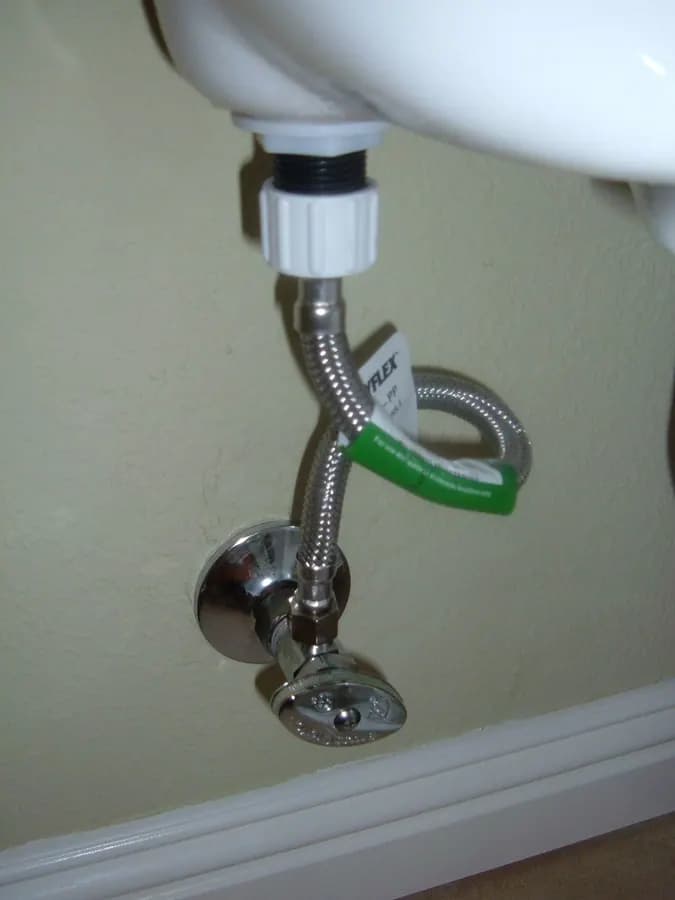
Photo credit
Photo: BrokenSphere, “Toilet water shutoff valve”, CC BY-SA 3.0, via Wikimedia Commons. Resized and converted to WebP; shown cropped.
Fixture shut-off
Stops water to one fixture
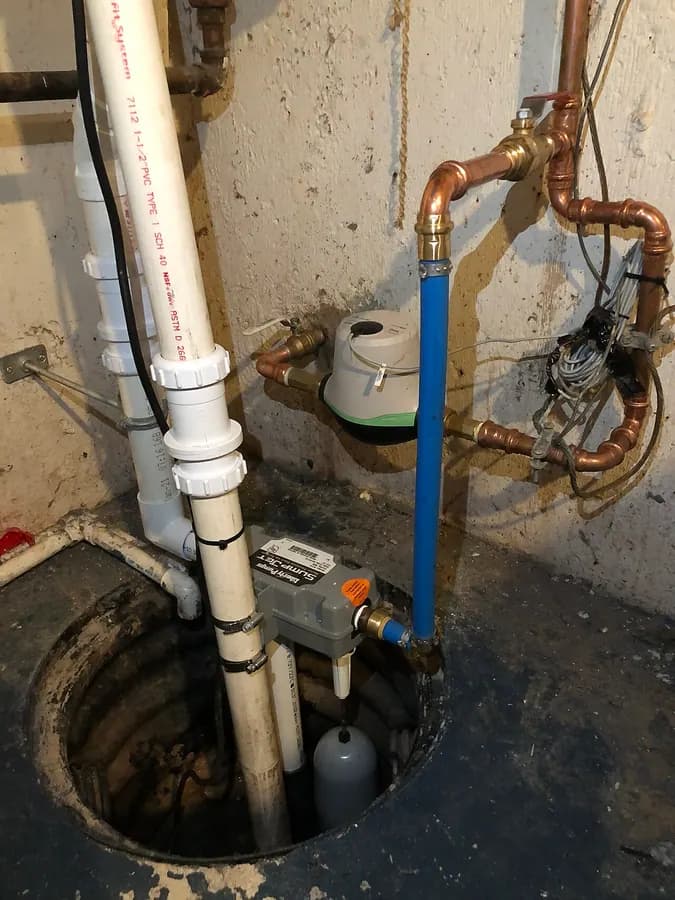
Photo credit
Photo: Famartin, “A newly-installed sump pump in the basement of a house along Aquetong...”, CC BY-SA 4.0, via Wikimedia Commons. Resized and converted to WebP; shown cropped.
Sump pump
Pushes groundwater out
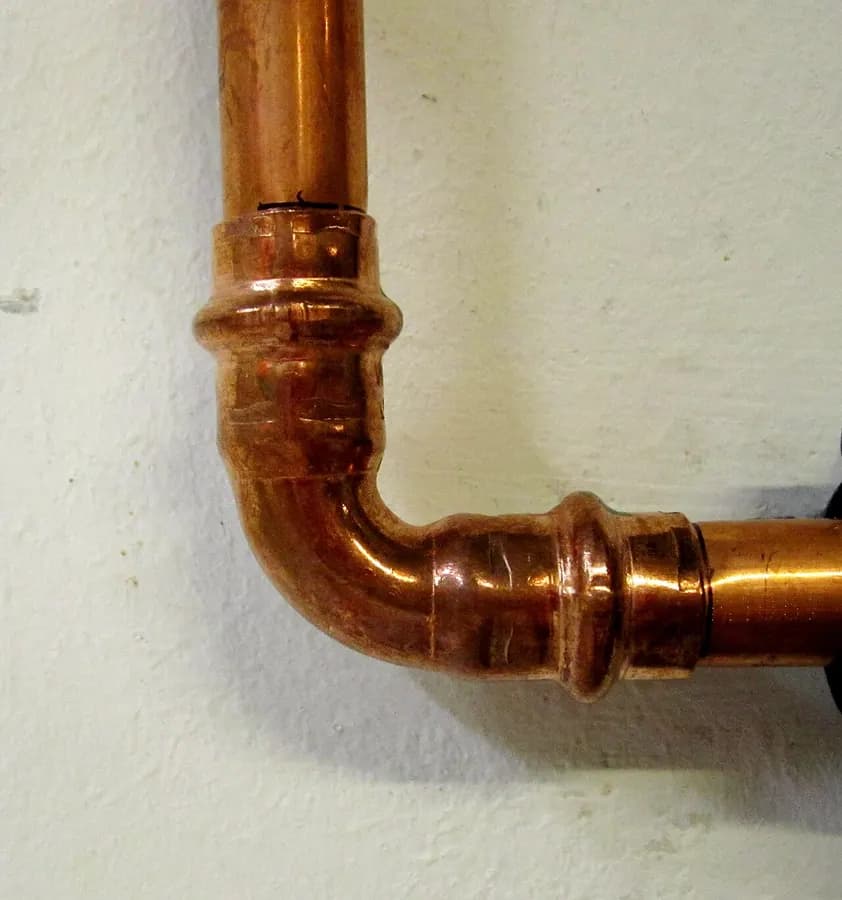
Photo credit
Photo: Cschirp, “Copper press fitting”, CC BY-SA 3.0, via Wikimedia Commons. Resized and converted to WebP; shown cropped.
Copper pipe & fitting
Ask what the new pipe is made of
Commonly permitted
Usually not
Your building department decides. If a contractor asks you to pull the permit in your own name, ask why.
Some of this work needs a permit and some does not. It depends on the scope of the job and where you live.
Water heater replacements, new or moved gas lines, repiping, and adding or moving fixtures are commonly permitted. Replacing a faucet or a toilet in the same spot usually is not.
T&P valve (temperature & pressure relief)
A safety valve on a water heater that opens if temperature or pressure gets too high. It should never be capped or plugged.
How people describe it when it can't wait
When it can be planned
Rebates and credits change often and differ by state, utility and sometimes county.
Most home projects can be paid in cash or financed. A few basics before you sign anything:
There is more in the financing guide.financing guide
We are not a lender and do not arrange loans. Financing information here is general education; lenders decide terms.
Notes from public sources, each linked.
General information, not legal, tax, engineering or insurance advice. Updated October 3, 2026. Photo credits