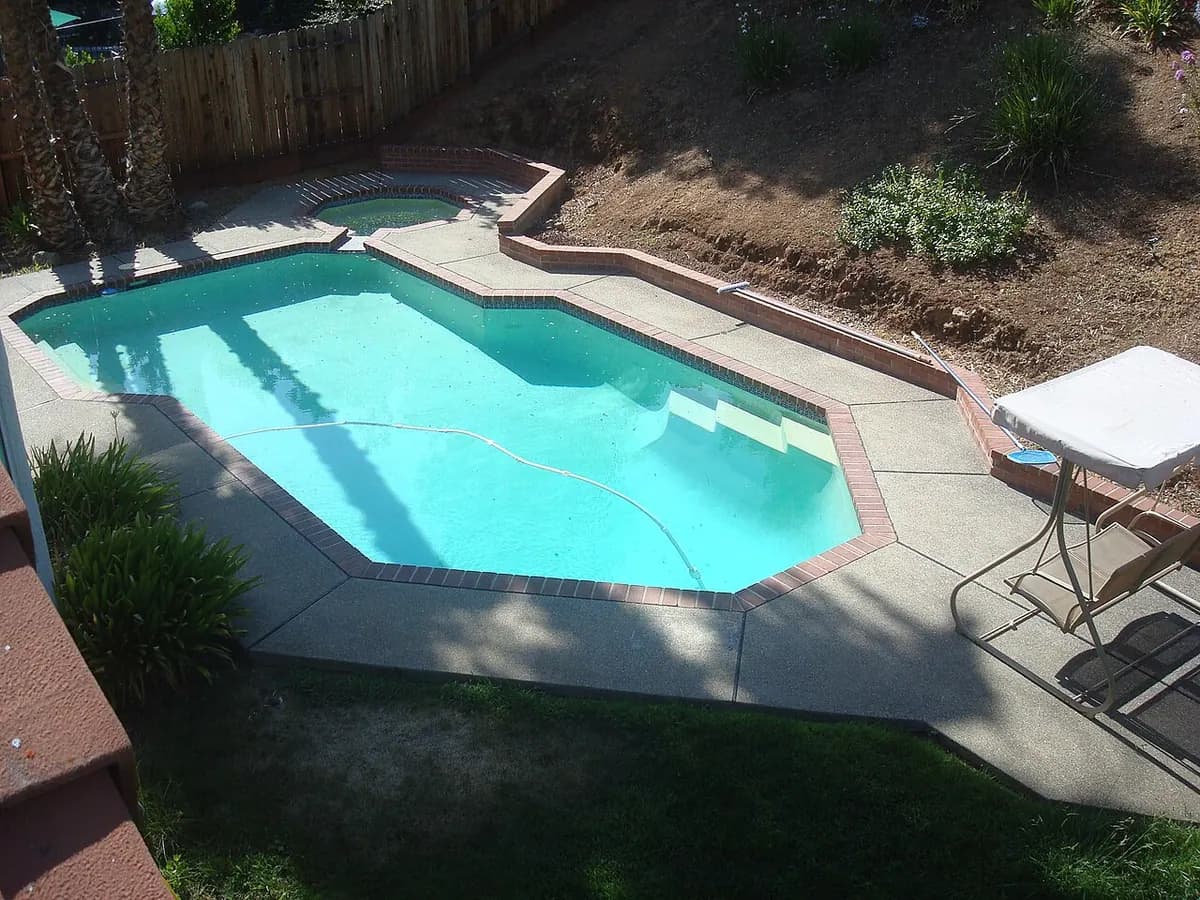
Photo: Andy “AJ” Jennings, “80 by noontime”, CC BY-SA 3.0, via Wikimedia Commons. Resized and converted to WebP; shown cropped.
Pools & spas
Inground and above-ground pools, liners, pumps, heaters, hot tubs.
On this page12 sections: urgent, quote, red flags, permits…
Is it urgent?
Tingling, sparks or a burning smell? Get everyone out of the water and call 911.
Emergency: call now
- Tingling, shocks or sparks
- Gas smell at the heater
- Drain entrapment risk
- Broken gate, small kids near
- Fast leak, yard flooding
Within a day or two
- Heater won't heat
- Pump fully stopped
- Green water before an event
- Failing salt cell or filter
- Contained leak
Can wait: schedule it
- Green pool, no deadline
- Opening or closing
- Equipment upgrade quote
- Regular service sign-up
- Resurfacing estimate
The full list, in the guide's words
Safety first: If anyone feels tingling or a shock in the water, or you see sparks or smell burning at the equipment, get people out of the water and call 911. If you smell gas at the heater, move away and call your gas utility or 911. If someone is held against a drain, call 911 right away.
Emergency: call now
- Tingling or shocks in the water, sparks, a burning smell, or a flickering or loose pool light
- A gas smell at the heater
- A drain entrapment risk
- A spa that is stuck heating and could scald someone
- A major leak dropping the water level fast or flooding your yard
- An unsecured pool or broken gate with small children or pets around
Within a day or two
- A heater that will not heat, or a pump that has fully stopped so the water goes stagnant
- Green, algae-covered water before a planned event
- A failing salt cell or filter, or a steady but contained leak
Can wait: schedule it
- Green-pool cleanups with no deadline
- Equipment upgrade quotes, spring openings and fall closings, recurring service sign-ups
- Resurfacing or remodel estimates and water chemistry tune-ups
This is general guidance, not a diagnosis. If anyone is in danger, call 911 first.
Choosing a pool: a beginner's decision tree
Work through these steps in order. Each answer narrows your options before you talk to anyone who is selling one.
Step 1: Inground or above-ground?
- Choose above-ground if you want the smallest commitment. It is usually the quickest to install and the least expensive way to get a pool, needs far less digging, and can often be removed or moved later. You get fewer shapes and depths, and it blends into the yard less.
- Choose inground if you want a permanent feature of the property. You can choose the depth and shape, add steps, benches or a spa, and it becomes part of the landscape. It involves heavy excavation, a longer timeline and a larger project overall.
- Either way, check your local rules first. Many places regulate even above-ground pools, with permits, barriers and electrical requirements.
Step 2: Which construction type? (inground only)
- Vinyl liner. A steel, polymer or concrete wall with a vinyl liner over it. It generally costs the least up front of the three. The surface is smooth and gentle underfoot, but the liner wears out and is replaced over the life of the pool, and your shape options are more limited.
- Fiberglass. A single factory-made shell lowered into the hole by crane. It is generally the fastest to install once the hole is dug, and its smooth surface resists algae and tends to need less chemical care. You are limited to the shapes and sizes the manufacturers make and that can be trucked to your lot, and the crew needs room and clear overhead space for the crane.
- Gunite or concrete. Concrete sprayed over a steel frame, then finished with plaster, pebble or tile. It offers the most freedom in shape, size and depth and is the most customizable. It also generally takes the longest to build, the surface needs resurfacing every so often, and the finish usually needs more chemical attention.
- Ask any installer to explain the replacement and resurfacing schedule for the type they are quoting, in writing.
Picture: Four ways a pool is built
Quickest to put in; can often be taken down. Ask each bidder which type is quoted.
Drawing made for this site · simplified, not to scale
Step 3: What fits your lot?
- Setbacks, easements and lot coverage. Zoning limits how close to the property line you can build and how much of the lot can be covered. Utility easements can rule out part of the yard.
- Utilities. Codes require clearance from overhead power lines. Call 811 before anyone digs so buried lines are marked. Septic systems and wells have their own required distances.
- Slope and soil. A sloped lot may need retaining walls. Rock, clay or sandy soil change the excavation work.
- Groundwater. In areas with a high water table, an empty inground pool can be pushed up out of the ground. Never drain a pool without checking with a pool professional first.
- Access. Excavators, concrete trucks and cranes all need a path in. A narrow gate or tight side yard can limit your choices or add work.
- Neighbors and HOA. Many associations have their own approval step, fence rules or noise limits.
Step 4: Timeline
- The usual order is design and approvals, excavation, structure, plumbing and electrical, inspections, finish, decking and fence, then fill and startup.
- The slowest parts are often approvals and the contractor's schedule, not the digging. Good installers book their season well ahead, so start planning months before you want to swim.
- On site, fiberglass is generally quickest, vinyl liner is in the middle and gunite or concrete is longest. Weather and inspections can slip any schedule.
Step 5: Permits and safety barriers
- Expect a permit, plan review and several inspections, which often include excavation or steel, electrical bonding, the barrier and a final inspection.
- Safety barrier rules (fences, self-latching gates, alarms or covers) are tied to the permit. Your building department decides what applies at your address.
- Ask who pulls the permit and who is responsible if an inspection fails.
What's on a pools & spas quote
EquipmentAsk: is the pump variable-speed?
The pump, filter, heater and automation, each by brand and model. For a pump, ask whether it is variable-speed.
Labor & chemicalsAsk: which chemicals, which extras?
For recurring service, ask which chemicals are included and what counts as an extra visit.
Surface & structureAsk: liner, plaster or shell?
The liner, plaster, pebble or fiberglass shell, and any repairs to it.
Plumbing & bondingAsk: is the bonding included?
The pipes, the wiring and the metal bonding that keep the pool safe.
Deck, barrier, permitAsk: fence and permit included?
The surrounding patio or deck, the fence or safety barrier, and the permit and inspections.
StartupAsk: fill, balance, walkthrough?
Fill, balancing and a walkthrough of how to run the equipment.
What a good estimate spells out9 things to look for
- The contractor's legal name, license number if one applies, and contact details, plus your name and address.
- What work is included, and what is not.
- The brand, model and size of major equipment and materials, not just standard or builder grade.
- Who pulls the permit and who pays for it and for inspections.
- Cleanup, and what happens to the old materials.
- A start date and a realistic finish date, and what happens if the schedule slips.
- Warranty terms: what is covered, for how long and who honors it.
- When and how you pay, tied to finished stages of work rather than just dates.
- How changes are handled: a written price for any change before the work happens.
Know what you're looking at
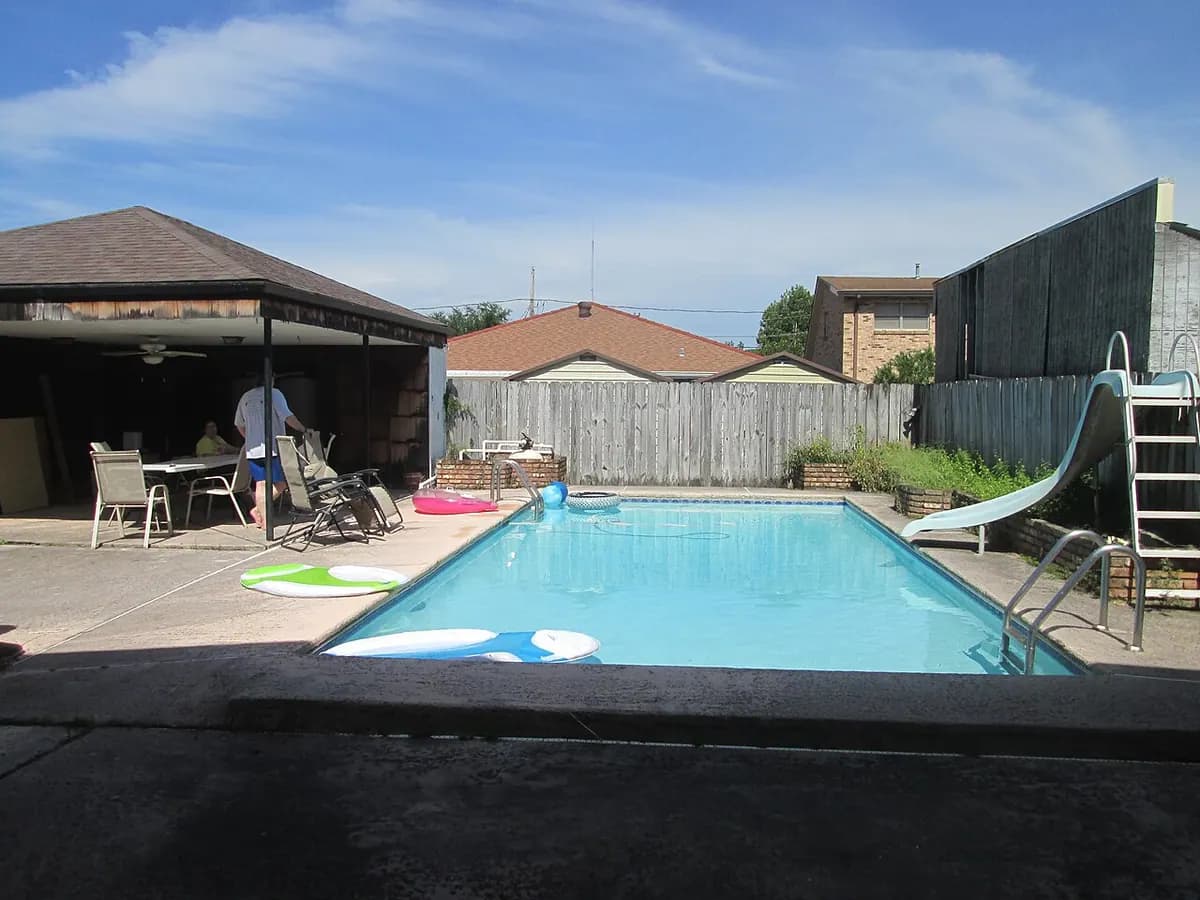
Shape and depth
Ask for dimensions in writing
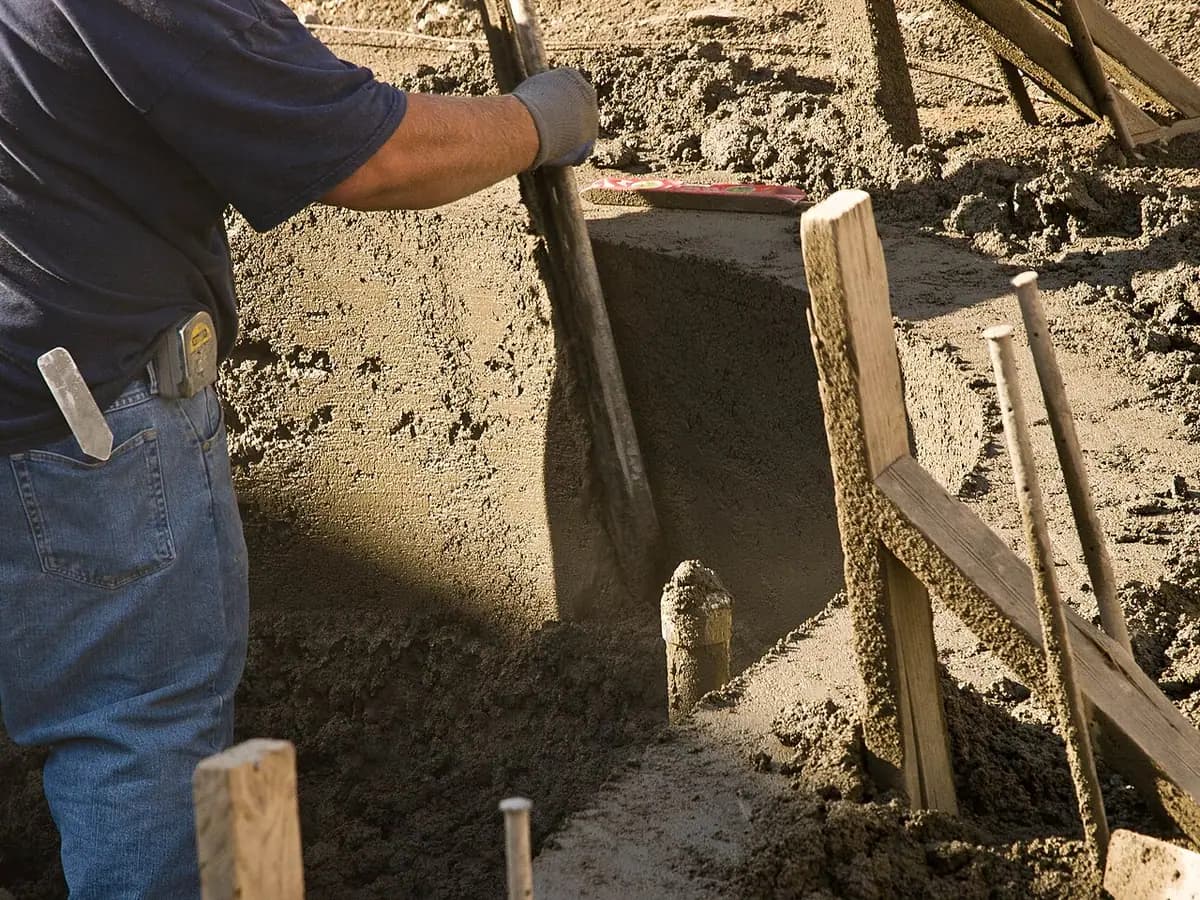
Digging comes first
Ask about rock and groundwater
Dorian Wallender from Lake Havasu City, Arizona, USA · CC BY-SA 2.0
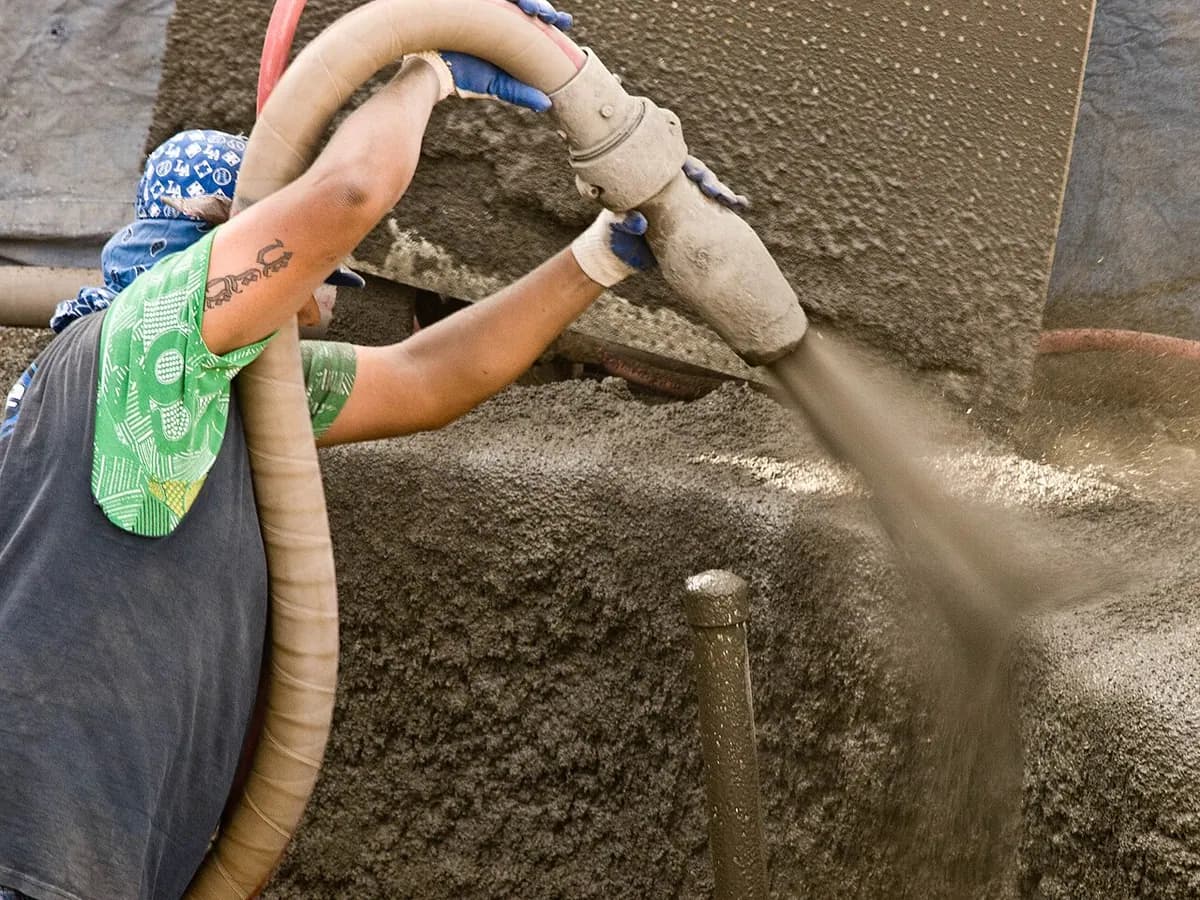
Concrete being sprayed
Ask about inspections at this stage
Dorian Wallender from Lake Havasu City, Arizona, USA · CC BY-SA 2.0
Red flags
4 of 11One total for a new pool
Ask for each part priced: dig, deck, fence.
Dig allowances not defined
Ask how rock and groundwater are priced.
No barrier or bonding plan
Both are inspected for safety.
Vague service pricing
Ask about visits, chemicals and extras.
7 more red flags
Pressure to sign today, or a price that is only good right now.
A fair quote is still fair tomorrow.
No written quote, or a quote that is a single total with no detail about what is included.
A large payment up front, or a request for cash only.
Some states limit how much a contractor can ask for before work starts.
A license number that does not check out.
Where your state licenses this trade, look the number up yourself on the state licensing board's site.
No proof of insurance.
Ask for a certificate sent to you directly by the insurer or the agent.
A price far below every other quote, followed by extras once the work has started.
Someone who knocks on your door uninvited, or who will not give recent local references.
Where homeowners say it goes wrong
- Their regular pool guy ghosts them or no-shows, especially in peak season when everyone's slammed
- They get vague pricing and surprise charges for chemicals and 'extra' visits
- The pool turned green or cloudy days before guests/a party and they're panicking
- An expensive piece of equipment (heater, pump) died and they don't know who to trust or what it should cost
- They're confused by new DOE pump rules, saltwater vs. chlorine, and automation options and want a straight answer
Ask every pool contractor
What is included in the price (excavation, decking, fence or barrier, electrical, startup), and what is not?
How are surprises such as rock, high groundwater or poor access handled and priced?
Who handles permits, inspections and any HOA or neighbor approvals, and what is a realistic timeline from signing to swimming?
2 more questions
Are you licensed where this work requires it, and insured? Can I see the license number and a certificate of insurance sent to me by your insurer?
What exactly does the warranty cover, for how long, and who honors it (you, the manufacturer, or both)? Will you put it in writing?
Permits
Work like this usually needs a permit.
Pools usually require a permit and inspections, including electrical bonding and safety barrier requirements. Zoning (setbacks, easements, lot coverage) and HOA rules often apply too, and many places also regulate above-ground pools.
- Your building department decides what applies at your address. Rules differ by city and county, and HOA, condo or historic-district rules can add more.
- Ask who pulls the permit. Normally the licensed contractor does and the price includes it. If a contractor asks you to pull it in your own name, ask why: it can shift responsibility for the work to you.
- If you are unsure, call your local building department before you sign. Unpermitted work can cause problems with insurance and when you sell.
Words you'll see
DE (diatomaceous earth) filter and grids
A filter that uses a fine powder over grids. It catches very small particles but takes more care.
What this trade covers
15 kinds of jobsIn plain words, trade terms in brackets
- Regular cleaning: skimming, brushing, vacuuming, testing and balancing the water
- Opening the pool in spring and closing it for winter
- Clearing green, algae-filled water with a heavy chlorine dose (shock)
- Fixing equipment: pump motors, filters, heaters, salt cells and controls
- New variable-speed pumps that meet U.S. energy rules (DOE)
- Fixing or replacing a gas, heat pump or electric pool heater
- Saltwater systems that turn salt into chlorine (SWG), and new salt cells
- Cleaning or replacing the filter: cartridge, sand or fine powder (DE)
- Finding leaks in the pipes, the pool shell and its fittings
- Fixing pool lights, including LED swaps and the wiring that prevents shocks (bonding)
- Redoing tile, plaster and other pool surfaces
- Hot tub and spa repair: jets, blowers, controls and heaters
- Controls that run the pool from your phone (automation)
- Drain covers that keep a swimmer from being held against the drain (VGB)
- Acid washing, draining and deep cleaning the pool
How people describe itUrgent calls and planned ones
When it can't wait
- “I think someone got shocked by the pool light - we felt a tingle in the water”
- “There's a burning smell coming from the pool equipment pad”
- “The pool pump is leaking water everywhere and won't shut off”
- “Water is gushing out by the equipment and the level is dropping fast”
- “My toddler/dog can't be kept away from the pool and the gate/cover is broken”
- “The spa got stuck running hot and someone could get burned - it won't turn off”
- “I smell gas near the pool heater”
- “The pump is making a loud grinding noise and smoking”
- “We have a pool party tomorrow and the water is bright green - kids will be in it”
- “Someone's hair/limb got pulled toward the main drain”
- “The pool is losing inches of water a day and it's flooding my yard/foundation”
- “Sparks came from the pool light junction box”
When it can be planned
- “I'd like a quote for weekly pool cleaning service”
- “Can you open my pool for the season?”
- “I want to upgrade to a variable-speed pump - what does that cost?”
- “My pool is a little cloudy, can someone take a look?”
- “I'm interested in switching to a saltwater system”
- “Can I get an estimate to replaster/resurface the pool?”
- “I need my pool closed/winterized before it gets cold”
- “How much to add automation so I can control it from my phone?”
Paying for it
Before you finance anything6 basics, then the financing guide
Most home projects can be paid in cash or financed. A few basics before you sign anything:
- Ask for the cash price and the financed price in writing, for the same scope of work. They can differ, because a financing fee (sometimes called a dealer fee) may be built into the financed price.
- Compare the total you will pay over the whole loan, not just the monthly payment.
- Read the fine print on same-as-cash and zero-interest offers, especially what happens if the balance is not paid in full by the end of the promotional period.
- PACE financing is repaid through your property tax bill and can place a lien on your home. Read the terms closely, and consider asking your mortgage servicer how it is treated, before you agree.
- Utility and state programs sometimes offer low-rate loans for efficiency work. Check yours before accepting the contractor's offer.
- Take loan paperwork home and read it. A sign-it-today loan is a reason to slow down.
There is more in the financing guide.financing guide
We are not a lender and do not arrange loans. Financing information here is general education; lenders decide terms.
What an expert knows
Short notes from public sources such as federal agencies, safety groups and trade associations. Each note links to the page it came from, and every page was opened and read on 2026-10-03. This is a starting point, not a complete list of every rule or program, and it is general information, not legal, tax, engineering or insurance advice. Rules and prices vary by place, so confirm what applies at your address.
Types, pros, cons and lifespan7 notes, each with its source
- Concrete in-ground pool: The most customizable choice: any shape, size or feature. With proper care it can last decades.Pool & Hot Tub Alliance: Choosing Your Pool Type (opens in a new tab)
- Fiberglass in-ground pool: Prefabricated, so it installs faster. Low maintenance with a smooth finish and resistant to chemical wear. PHTA puts durability at 30 years or more.Pool & Hot Tub Alliance: Choosing Your Pool Type (opens in a new tab)
- Vinyl liner in-ground pool: The most affordable in-ground option and quick to install. The liner typically needs replacing after about 7 to 15 years.Pool & Hot Tub Alliance: Choosing Your Pool Type (opens in a new tab)
- Above-ground pools: Metal frame pools are strong and last about 5 to 10 years, and a replaceable liner can extend that. Resin pools are rust-resistant and suit saltwater.Pool & Hot Tub Alliance: Choosing Your Pool Type (opens in a new tab)
- Variable-speed pump: ENERGY STAR notes that filtering needs only half the flow of running a pool cleaner, so a single-speed pump wastes energy. Variable-speed pumps are quieter, need less maintenance and last longer.ENERGY STAR: Pool Pumps (opens in a new tab)
- Robotic cleaners: Powered by low-voltage electricity instead of the pool pump, with their own built-in filters.ENERGY STAR: Pool Pumps (opens in a new tab)
- Safety covers: A well-maintained pool cover adds another layer of protection to a fence and door alarms.CPSC Pool Safely: Safety Barrier Guidelines for Residential Pools (opens in a new tab)
Sizing and choosing4 notes, each with its source
- Pick for your yard and life: Your choice of type and material affects cost, durability and maintenance, so match it to your budget, space and how you will use it.Pool & Hot Tub Alliance: Choosing Your Pool Type (opens in a new tab)
- Pump speed and run time: Running a pump faster than needed wastes energy. A timer that cuts filtering from 24 hours to 6 reduces energy use by about three quarters, and several short cycles can keep debris down.ENERGY STAR: Pool Pumps (opens in a new tab)
- Plan the barrier first: Pool barriers should keep permanent structures and equipment from being used as a climbing aid, and a fence that fully surrounds the pool is better than one using the house as a side.CPSC Pool Safely: Safety Barrier Guidelines for Residential Pools (opens in a new tab)
- Call before you dig: Call 811 two to three business days before digging. Locators do not mark private lines such as sprinkler systems or a gas line to a grill.Illinois Extension: Avoid Injury, Fines, Power Outages by Calling 811 Before Digging (opens in a new tab)
Maintenance by season5 notes, each with its source
- Test the water often: Test chlorine and pH at least twice a day, and more when many people swim. Aim for a pH between 7.0 and 7.8. A DPD test kit is more accurate than strips.CDC: Home Pool and Hot Tub Water Treatment and Testing (opens in a new tab)
- Keep chlorine up: Swimmers' sweat and dirt, sunlight and jets all lower chlorine, so check it routinely.CDC: Home Pool and Hot Tub Water Treatment and Testing (opens in a new tab)
- Check the gate: The weak link in the strongest fence is a gate that does not close and latch. Make sure it is in working order every time.CPSC Pool Safely: Safety Barrier Guidelines for Residential Pools (opens in a new tab)
- Electrical near water: Keep electrical equipment dry, plug power cords only into working GFCI outlets, and unplug equipment that gets wet before you try to rescue it.CPSC: Home Electrical Safety Checklist (Pub 513) (opens in a new tab)
- Check covers: Keep pool covers well maintained so they stay a real barrier.CPSC Pool Safely: Safety Barrier Guidelines for Residential Pools (opens in a new tab)
Code and permit basics5 notes, each with its source
- Barrier rules are local: CPSC's barrier guidelines are not a federal standard, but some states and localities have built them into building codes. Check with your local authorities. This is general information, not legal advice.CPSC Pool Safely: Safety Barrier Guidelines for Residential Pools (opens in a new tab)
- What the guidelines recommend: A barrier at least 48 inches high measured on the outside, a bottom gap of no more than 4 inches (2 inches over grass or gravel), and no handholds or footholds. Some places require 60 inches.CPSC Pool Safely: Safety Barrier Guidelines for Residential Pools (opens in a new tab)
- Gates and doors: Pedestrian gates should open outward and be self-closing and self-latching. If the house forms one side of the barrier, add door alarms and self-closing, self-latching doors.CPSC Pool Safely: Safety Barrier Guidelines for Residential Pools (opens in a new tab)
- Above-ground pools: Ladders and steps should be capable of being secured, locked or removed, or surrounded by a barrier.CPSC Pool Safely: Safety Barrier Guidelines for Residential Pools (opens in a new tab)
- Utility marking: Any project that breaks ground should be marked first through 811, which is free. Digging near marked lines should keep 18 to 24 inches clear on all sides.Illinois Extension: Avoid Injury, Fines, Power Outages by Calling 811 Before Digging (opens in a new tab)
What moves the price4 notes, each with its source
- Pool type and material: Cost, durability and maintenance all depend on the type you choose, including how soon a liner will need replacing.Pool & Hot Tub Alliance: Choosing Your Pool Type (opens in a new tab)
- Barrier and alarms: A compliant fence, self-latching gates, door alarms and covers are part of the safe package.CPSC Pool Safely: Safety Barrier Guidelines for Residential Pools (opens in a new tab)
- Pump choice: Variable-speed and multi-speed pumps cost more to buy but cut running energy and last longer.ENERGY STAR: Pool Pumps (opens in a new tab)
- Site work: Utility marks can move a dig location, and private lines are the homeowner's responsibility.Illinois Extension: Avoid Injury, Fines, Power Outages by Calling 811 Before Digging (opens in a new tab)
Common scams3 notes, each with its source
- Pay-up-front pushes: Never pay the full cost before work is complete, and avoid cash or wire payments.FEMA Building Codes Toolkit: Checklist to Ask Your General Contractor (opens in a new tab)
- Door-knocking offers: Uninvited crews who say they are in the area are a classic home improvement scam pattern.FTC: How To Avoid a Home Improvement Scam (opens in a new tab)
- Pressure to sign today: A discount that only holds if you sign right away is a warning sign.FTC: How To Avoid Scams After Weather Emergencies and Natural Disasters (opens in a new tab)
Ask for this in writing4 notes, each with its source
- Barrier plan: How the fence, gates and doors will meet your local rules, with the gate hardware named.CPSC Pool Safely: Safety Barrier Guidelines for Residential Pools (opens in a new tab)
- Scale drawings: California requires swimming pool contracts to include detailed scale drawings, which is good practice anywhere.California CSLB: Home Improvement Contracts (opens in a new tab)
- Pump and equipment: The pump type and speeds, and how run times are set.ENERGY STAR: Pool Pumps (opens in a new tab)
- Permits and 811: Who obtains the permits and who requests the utility marking.Illinois Extension: Avoid Injury, Fines, Power Outages by Calling 811 Before Digging (opens in a new tab)
Repair or replace3 notes, each with its source
- Liners and frames wear out: Vinyl liners last about 7 to 15 years and metal frame above-ground pools about 5 to 10, so budget for replacement.Pool & Hot Tub Alliance: Choosing Your Pool Type (opens in a new tab)
- Single-speed pump: A pump that runs at one fast speed wastes energy. Replacing it with a variable-speed model also lowers noise and strain on the plumbing.ENERGY STAR: Pool Pumps (opens in a new tab)
- Fix the gate now: A gate that does not latch every time defeats the barrier, so repair or replace the hardware right away.CPSC Pool Safely: Safety Barrier Guidelines for Residential Pools (opens in a new tab)
Questions to ask an expert4 notes, each with its source
- How will the barrier meet local code and CPSC's guidelines? Ask about height, gaps, gate latch and house doors.CPSC Pool Safely: Safety Barrier Guidelines for Residential Pools (opens in a new tab)
- Which pump do you recommend, and how will I set run times? Ask about variable-speed models.ENERGY STAR: Pool Pumps (opens in a new tab)
- How will I test and balance the water? Ask what test kit and targets to use.CDC: Home Pool and Hot Tub Water Treatment and Testing (opens in a new tab)
- Which pool type fits my site and how long will it last? Ask about liner or frame replacement.Pool & Hot Tub Alliance: Choosing Your Pool Type (opens in a new tab)
General information, not legal, tax, engineering or insurance advice. Photos credited with their licenses; drawings made for this site. Guide updated October 3, 2026.