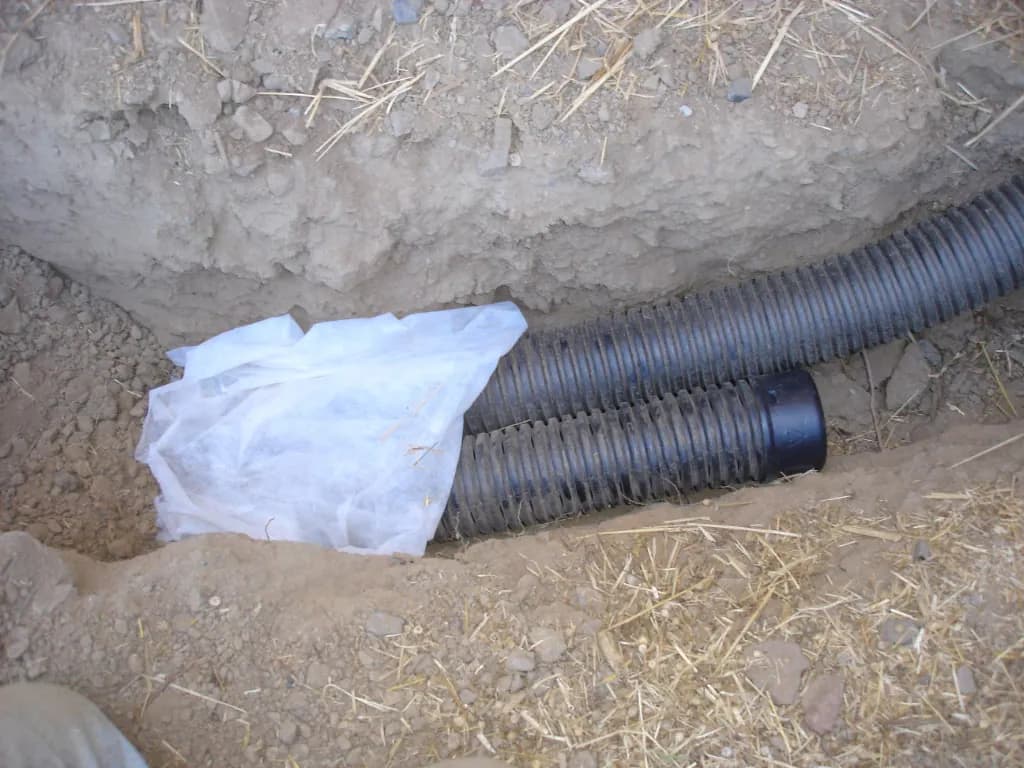
Photo: Scooter133 at English Wikipedia, “FrenchDrain 03”, Public domain, via Wikimedia Commons. Resized and converted to WebP; shown cropped.
Landscaping & lawn
Lawn care, planting, patios, drainage, irrigation, tree work.
On this page11 sections: urgent, quote, red flags, permits…
Is it urgent?
Tree or limb near a power line? Stay far away and call 911 and your utility.
Emergency: call now
- Tree down on house or line
- Retaining wall bulging
- Sagging deck or failed post
- Burst line near foundation
- Washout threatens building
Within a day or two
- Water pooling near the house
- Leaning wall, not falling
- Wobbly deck rail
- Leaking irrigation valve
- Dead zone in summer heat
Can wait: schedule it
- Mowing and cleanups
- Mulch, planting, sod
- New patio or wall
- Any quote
The full list, in the guide's words
Safety first: If a tree or limb is touching or near a power line, stay far away and call 911 and your utility. Do not go near a fallen line or anything it is touching.
Emergency: call now
- A fallen or hung-up tree or limb on a house, a car, a walkway or a power line
- A retaining wall that is bulging, leaning or collapsing near people or buildings
- A deck that is sagging, or has a failed post or footing
- A broken irrigation main or burst line flooding toward the foundation
- A storm washout or slope failure that threatens a building
Within a day or two
- Drainage issues causing pooling, but not yet entering the home
- A leaning wall that is not about to fall, or a wobbly deck rail
- A leaking valve, washed-out mulch or soil after rain, or a dead irrigation zone in summer heat
Can wait: schedule it
- Mowing, cleanups, mulch, planting, sod and lighting
- New patios, walls and decks, and any quote or estimate
This is general guidance, not a diagnosis. If anyone is in danger, call 911 first.
What's on a landscaping & lawn quote
Site prep & diggingAsk: how much equipment time?
Removing grass, grading and digging. This is where equipment time is spent.
Base & drainageAsk: base depth, compaction, drains?
Crushed stone, compaction and drains. The hidden layer that decides how long a patio, walk or wall lasts.
Hardscape materialsAsk: brand, product line, edging
Pavers, stone or block, with the brand or product line, and edge restraints.
Plants & soilAsk: what's covered, for how long?
Plant sizes and counts, topsoil, mulch and seed or sod. Ask what is guaranteed and for how long.
Irrigation or lightingAsk: zones, controller, fixtures
Zones, heads and controllers, or the fixtures, transformer and wiring.
Labor & haul-awayAsk: where do spoils and debris go?
Ask how spoils and debris are handled.
What a good estimate spells out9 things to look for
- The contractor's legal name, license number if one applies, and contact details, plus your name and address.
- What work is included, and what is not.
- The brand, model and size of major equipment and materials, not just standard or builder grade.
- Who pulls the permit and who pays for it and for inspections.
- Cleanup, and what happens to the old materials.
- A start date and a realistic finish date, and what happens if the schedule slips.
- Warranty terms: what is covered, for how long and who honors it.
- When and how you pay, tied to finished stages of work rather than just dates.
- How changes are handled: a written price for any change before the work happens.
Know what you're looking at

Sprinkler zones
Ask about the controller and winterizing
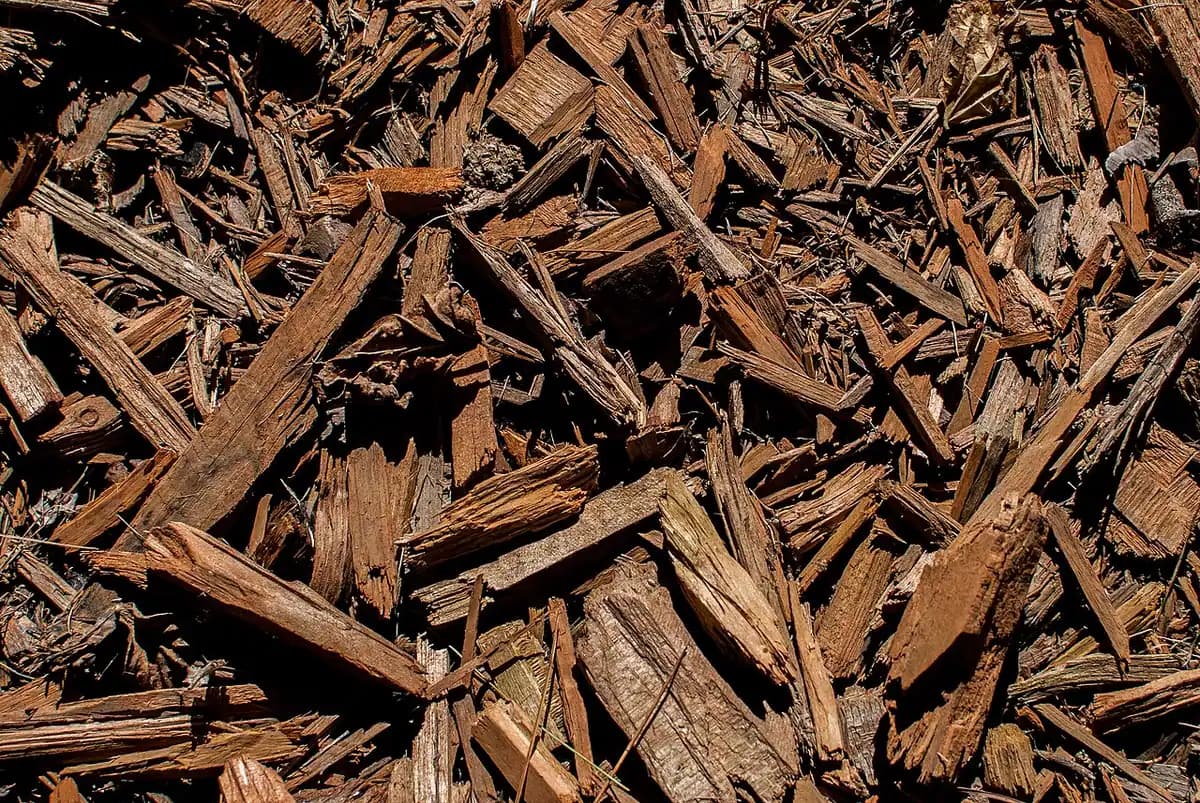
Mulch
Keep it back from trunks and walls
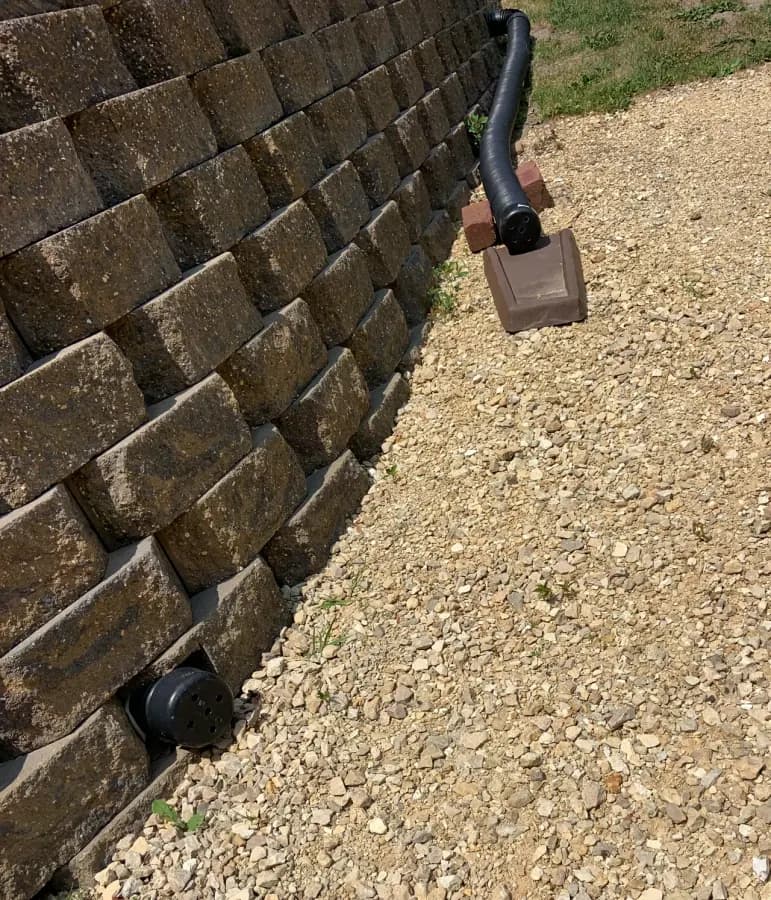
Retaining wall
Drainage behind it matters most
Red flags
4 of 11Patio quote with no base plan
Hardscape fails from the base up.
Big deposit, no start date
Or a crew that starts, then disappears.
Tall wall, no engineering
Ask about drainage and the permit.
Tree removal, no insurance proof
The work is dangerous.
7 more red flags
Pressure to sign today, or a price that is only good right now.
A fair quote is still fair tomorrow.
No written quote, or a quote that is a single total with no detail about what is included.
A large payment up front, or a request for cash only.
Some states limit how much a contractor can ask for before work starts.
A license number that does not check out.
Where your state licenses this trade, look the number up yourself on the state licensing board's site.
No proof of insurance.
Ask for a certificate sent to you directly by the insurer or the agent.
A price far below every other quote, followed by extras once the work has started.
Someone who knocks on your door uninvited, or who will not give recent local references.
Where homeowners say it goes wrong
- The last guy quoted, started the job, and disappeared mid-project leaving a torn-up yard
- Crews show up late, on no fixed schedule, or skip mows without notice
- Their previous hardscape or wall failed in a couple years from a cheap install (no proper base or drainage)
Ask every landscaper
What base and drainage will go under this, how deep, and how is it compacted?
How will water drain away from the house when you are finished?
Who has underground utilities marked before digging, and what is the schedule and cleanup plan?
2 more questions
Are you licensed where this work requires it, and insured? Can I see the license number and a certificate of insurance sent to me by your insurer?
What exactly does the warranty cover, for how long, and who honors it (you, the manufacturer, or both)? Will you put it in writing?
Permits
Some of this work needs a permit and some does not. It depends on the scope of the job and where you live.
Taller retaining walls, decks, large grading changes, drainage work that affects neighbors, and tree removal in protected areas may need approval. Patios and plantings usually do not.
- Your building department decides what applies at your address. Rules differ by city and county, and HOA, condo or historic-district rules can add more.
- Ask who pulls the permit. Normally the licensed contractor does and the price includes it. If a contractor asks you to pull it in your own name, ask why: it can shift responsibility for the work to you.
- If you are unsure, call your local building department before you sign. Unpermitted work can cause problems with insurance and when you sell.
Words you'll see
Hardscape
The solid, non-plant parts of a landscape: patios, walkways, walls and steps.
What this trade covers
14 kinds of jobsAs the trade lists them
- Weekly lawn mowing and maintenance (mow, edge, trim, blow)
- Spring and fall cleanups (leaf removal, bed cutbacks, mulch)
- Paver patio, walkway, and driveway installation (hardscaping)
- Retaining wall design and construction (block, boulder, segmental)
- Wood and composite deck building and repair
- Sod installation and lawn renovation / overseeding / aeration
- Tree and shrub planting, pruning, and bed design (softscaping)
- Mulch and stone bed installation and refresh
- Irrigation / sprinkler system install, repair, and winterization (blowout)
- Drainage solutions (French drains, dry wells, grading, downspout tie-ins)
- Outdoor living features (fire pits, outdoor kitchens, pergolas)
- Landscape lighting (low-voltage path and accent lighting)
- Snow removal and seasonal plowing / ice management (cold-climate shops)
- Sodding, seeding, and turf grading for new construction
How people describe itUrgent calls and planned ones
When it can't wait
- “A tree just came down across my driveway and I can't get my car out”
- “A storm knocked a big branch onto my roof and I think it cracked something”
- “My retaining wall is bulging and leaning, I'm scared it's going to collapse on the kids' play area”
- “There's water flooding into my basement, I think it's from the yard grading after the storm”
- “A tree fell and it's leaning on the power line in my backyard”
- “My deck is sagging and one of the posts gave way, it feels like it's going to collapse”
- “The sprinkler line burst and water is gushing all over the lawn and toward the house”
- “A big limb is hanging over my front door cracked and ready to drop”
- “My paver wall by the driveway just gave out and there's a pile of blocks and dirt in the road”
- “The storm washed out my whole hillside and dirt is sliding toward the house”
When it can be planned
- “I'd like a quote for a new paver patio and fire pit in the backyard”
- “Can someone come do a spring cleanup and put down fresh mulch?”
- “I want to sign up for weekly mowing for the season”
- “Looking to build a composite deck off the back of the house this summer”
- “My grass has bare patches, can you aerate and overseed in the fall?”
- “I'd like an estimate on a retaining wall to level out my sloped yard”
- “Can you come winterize / blow out my sprinkler system before it freezes?”
- “I want to redo my front landscaping with some new plantings and lighting”
Paying for it
Before you finance anything6 basics, then the financing guide
Most home projects can be paid in cash or financed. A few basics before you sign anything:
- Ask for the cash price and the financed price in writing, for the same scope of work. They can differ, because a financing fee (sometimes called a dealer fee) may be built into the financed price.
- Compare the total you will pay over the whole loan, not just the monthly payment.
- Read the fine print on same-as-cash and zero-interest offers, especially what happens if the balance is not paid in full by the end of the promotional period.
- PACE financing is repaid through your property tax bill and can place a lien on your home. Read the terms closely, and consider asking your mortgage servicer how it is treated, before you agree.
- Utility and state programs sometimes offer low-rate loans for efficiency work. Check yours before accepting the contractor's offer.
- Take loan paperwork home and read it. A sign-it-today loan is a reason to slow down.
There is more in the financing guide.financing guide
We are not a lender and do not arrange loans. Financing information here is general education; lenders decide terms.
What an expert knows
Short notes from public sources such as federal agencies, safety groups and trade associations. Each note links to the page it came from, and every page was opened and read on 2026-10-03. This is a starting point, not a complete list of every rule or program, and it is general information, not legal, tax, engineering or insurance advice. Rules and prices vary by place, so confirm what applies at your address.
Types, pros, cons and lifespan6 notes, each with its source
- Cool-season grasses: Kentucky bluegrass, perennial ryegrass, fine fescues and tall fescue grow best in spring and autumn and go dormant in hot, dry summer weather.Illinois Extension: Watering Your Lawn (opens in a new tab)
- Warm-season grasses: Bermudagrass and zoysia grow in summer and go dormant in winter, and they are mowed lower than cool-season turf.University of Maryland Extension: Maintaining an Established Lawn (opens in a new tab)
- Clock-based versus smart controllers: WaterSense labels weather-based controllers, which tailor watering to local weather, and soil moisture-based controllers, which hold off watering when soil is wet enough. Both help avoid the overwatering of a plain clock-based timer.EPA WaterSense: Labeled Irrigation Controllers (opens in a new tab)
- Pavers: Brick, concrete or stone pavers go over a compacted gravel base and a sand bed, with edge restraints and sand swept into the joints.Oregon State University Extension: 10-Step Guide to Installing Pavers (opens in a new tab)
- Rain barrels: They catch roof runoff for the lawn or garden. Roof water can carry bacteria and roofing chemicals, so think twice before using it on edible plants.EPA Soak Up the Rain: Rain Barrels (opens in a new tab)
- Tree care professionals: Arborists are trained to prune, diagnose pest problems, fertilize, transplant and remove trees. Not all tree care companies employ one.University of Minnesota Extension: How to Hire a Tree Care Professional (opens in a new tab)
Sizing and choosing5 notes, each with its source
- Mow height: Keep Kentucky bluegrass about 2.5 to 3.5 inches and bermudagrass 1 to 1.5 inches. Remove no more than one third of the blade at a time.University of Maryland Extension: Maintaining an Established Lawn (opens in a new tab)
- How much water: Grass in active growth does best with about 1 inch of water a week from rain or irrigation. One inch soaks about 6 inches deep, so water deeply and not often.University of Maryland Extension: Maintaining an Established Lawn (opens in a new tab)
- Paver depth and slope: Dig deep enough for 4 to 6 inches of base, 1 inch of sand and the paver thickness, and slope the surface away from the house about 1 inch every 4 feet.Oregon State University Extension: 10-Step Guide to Installing Pavers (opens in a new tab)
- Drainage by the house: Slope the ground away from the foundation about 1 inch per foot for 6 feet, with about one downspout per 50 feet of eave and extensions that discharge 4 feet past the wall.University of Minnesota Extension: Moisture in Basements (opens in a new tab)
- Know your hardiness zone: The USDA map is based on the average annual extreme minimum winter temperature. Enter your ZIP to see which perennials are likely to thrive.USDA: Plant Hardiness Zone Map (opens in a new tab)
Maintenance by season5 notes, each with its source
- Spring and autumn: Mow cool-season turf in spring and autumn, and use your region's lawn calendar to time aeration, liming, fertilizing and overseeding by grass type.University of Maryland Extension: Maintaining an Established Lawn (opens in a new tab)
- Summer: Mow warm-season grass in summer. Decide early whether to water consistently or let a cool-season lawn go dormant, and do not switch back and forth.Illinois Extension: Watering Your Lawn (opens in a new tab)
- Water smart: Water early in the day. Midday watering evaporates, and night watering can promote some turf diseases.Illinois Extension: Watering Your Lawn (opens in a new tab)
- Mower upkeep: Sharpen blades at the start of each season, or after about 10 hours of use. Dull blades leave frayed, brown-tipped grass.University of Maryland Extension: Maintaining an Established Lawn (opens in a new tab)
- Sprinkler systems: Adjust the programming through the season, and turn the system off in wet weather if it lacks a rain sensor.University of Maryland Extension: Maintaining an Established Lawn (opens in a new tab)
Code and permit basics4 notes, each with its source
- Call 811 before you dig: Calling 811 is free. It applies to planting trees and shrubs, patios, decks and fences, and locators do not mark private lines such as sprinklers. This is general information, not legal advice.Illinois Extension: Avoid Injury, Fines, Power Outages by Calling 811 Before Digging (opens in a new tab)
- Pesticide use by pros: In Minnesota, an arborist who applies a pesticide for hire must hold a state license, and the label is the law. Check what your state requires.University of Minnesota Extension: How to Hire a Tree Care Professional (opens in a new tab)
- City tree work rules: Many communities require tree care companies to register or employ certified arborists, and licensing alone does not show skill.University of Minnesota Extension: How to Hire a Tree Care Professional (opens in a new tab)
- Floodplain and permits: Permits are generally required for new structures, alterations and for development in a floodplain. Ask your code official before major grading or hardscape.FEMA Building Codes Toolkit: Checklist to Acquire a Building Permit (opens in a new tab)
What moves the price4 notes, each with its source
- Base and soil: A softer sub-base such as clay needs a thicker base, and surfaces that will carry vehicles need more than a patio.Oregon State University Extension: 10-Step Guide to Installing Pavers (opens in a new tab)
- Material allowance: Pavers cut to fit curves and odd spaces need a small allowance beyond the measured area.Oregon State University Extension: 10-Step Guide to Installing Pavers (opens in a new tab)
- Irrigation upgrades: A WaterSense labeled controller can cut overwatering, and some utilities offer rebates.EPA WaterSense: Labeled Irrigation Controllers (opens in a new tab)
- Tree work scope: Pruning, removal, pest treatment and diagnosis are different jobs, and credentials and insurance matter for each.University of Minnesota Extension: How to Hire a Tree Care Professional (opens in a new tab)
Common scams4 notes, each with its source
- Leftover paving or materials: Contractors offering leftover materials from another job are a classic home repair scam.FTC: How To Avoid a Home Improvement Scam (opens in a new tab)
- Unqualified tree crews: Not every tree company employs a professional arborist. Always ask for credentials and proof of insurance.University of Minnesota Extension: How to Hire a Tree Care Professional (opens in a new tab)
- Storm-chaser crews: After storms, out-of-town crews may arrive first at your door. Be wary of very low bids and requests for large up-front payments.FEMA: Beware of Post-Disaster Contractor Fraud (opens in a new tab)
- Pay-up-front pushes: Never pay the full job up front, and avoid cash or wire payments.FTC: How To Avoid a Home Improvement Scam (opens in a new tab)
Ask for this in writing4 notes, each with its source
- Arborist credentials: The arborist's certification and a certificate of liability and workers' compensation insurance. Contact the insurer to confirm the policy is current.University of Minnesota Extension: How to Hire a Tree Care Professional (opens in a new tab)
- Paver specifications: Base depth, compaction, edge restraints and slope, matched to how the area will be used.Oregon State University Extension: 10-Step Guide to Installing Pavers (opens in a new tab)
- Irrigation settings: The controller type and how the schedule will be set for each season.EPA WaterSense: Labeled Irrigation Controllers (opens in a new tab)
- Who calls 811: Whether you or the contractor will request utility marking.Illinois Extension: Avoid Injury, Fines, Power Outages by Calling 811 Before Digging (opens in a new tab)
Repair or replace4 notes, each with its source
- Brown does not mean dead: Dormant turf turns brown while growth is paused and typically recovers on its own when conditions improve.University of Maryland Extension: Maintaining an Established Lawn (opens in a new tab)
- Consider alternatives: When the conditions for a vigorous lawn cannot be provided, consider lawn alternatives instead of adding more water, fertilizer or pesticide.University of Maryland Extension: Maintaining an Established Lawn (opens in a new tab)
- Poor trees: An unhealthy tree can become an eyesore and a hazard, and an arborist can diagnose whether pruning, treatment or removal is the answer.University of Minnesota Extension: How to Hire a Tree Care Professional (opens in a new tab)
- Fix drainage first: Missing gutters, downspouts and grading are common causes of wet basements and are corrected first.University of Minnesota Extension: Moisture in Basements (opens in a new tab)
Questions to ask an expert5 notes, each with its source
- Are you certified, and by whom? ISA is the industry-standard certification for arborists.University of Minnesota Extension: How to Hire a Tree Care Professional (opens in a new tab)
- Can I see your work and call references? Ask if they would hire this professional again.University of Minnesota Extension: How to Hire a Tree Care Professional (opens in a new tab)
- Do your crews use protective equipment? A reputable arborist always does.University of Minnesota Extension: How to Hire a Tree Care Professional (opens in a new tab)
- What controller will my sprinklers use? Ask about weather-based or soil moisture-based models.EPA WaterSense: Labeled Irrigation Controllers (opens in a new tab)
- Who calls 811 and when? It is free and takes a few business days.Illinois Extension: Avoid Injury, Fines, Power Outages by Calling 811 Before Digging (opens in a new tab)
General information, not legal, tax, engineering or insurance advice. Photos credited with their licenses; drawings made for this site. Guide updated October 3, 2026.