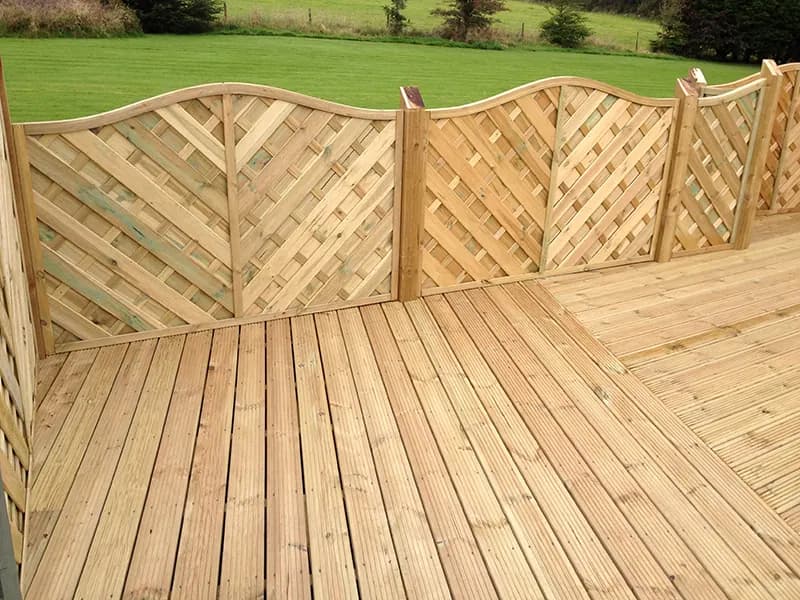
Photo: R3dus-01, “Decking and fence panels”, CC BY-SA 4.0, via Wikimedia Commons. Resized and converted to WebP; shown cropped.
Carpentry & decks
Decks, framing, trim, doors, stairs, built-ins.
On this page11 sections: urgent, quote, red flags, permits…
Is it urgent?
Deck or stairs pulling away or sagging? Keep everyone off. If someone is hurt, call 911.
Emergency: call now
- Deck or stairs separating
- Soft or sinking floor
- Cracked beam, sagging floor
- Hole in floor or roof frame
- Door or window won't lock
Within a day or two
- Rot spreading to framing
- Wobbly deck or railing
- Door won't close or latch
- Storm-damaged trim
Can wait: schedule it
- Remodel or built-ins
- Trim and crown molding
- New deck
- Addition or cabinets
The full list, in the guide's words
Safety first: Keep everyone off a deck or stairs that are separating, sagging or pulling away from the house. If something has collapsed and someone is hurt, call 911.
Emergency: call now
- A deck or stairs that are separating or collapsing
- A soft or sinking floor, or a cracked beam under a sagging floor
- A hole in the floor or roof framing
- An exterior door or window that will not lock after a break-in or a storm
Within a day or two
- Wood rot that is spreading toward the structure, or water getting into framing
- A deck or railing that is wobbly but not yet failing
- A door that will not close or latch, or storm-damaged trim and fascia
Can wait: schedule it
- Kitchen and bath remodels, built-ins, trim and crown molding, new decks, additions and cabinet work
- Any cosmetic or thinking-about-it project
This is general guidance, not a diagnosis. If anyone is in danger, call 911 first.
What's on a carpentry & decks quote
MaterialsAsk: lumber grade, treated or composite
Lumber species and grade, treated wood or composite for decks, and the trim material (MDF, poplar, pine). Sizes and quantities.
LaborAsk: flat price or hourly?
The time to frame, install and finish. Ask whether it is flat or hourly.
Hardware & fastenersAsk: outdoor-rated screws and hangers?
Joist hangers, ledger fasteners and corrosion-resistant screws for outdoor work.
FinishAsk: paint or stain included?
Primer, paint or stain, and whether it is included.
Demolition & disposalAsk: is haul-away included?
Removing what is there and hauling it away.
Drawings & permitAsk: who draws plans and pulls it?
Decks, additions and structural changes often need drawings that the building department reviews.
What a good estimate spells out9 things to look for
- The contractor's legal name, license number if one applies, and contact details, plus your name and address.
- What work is included, and what is not.
- The brand, model and size of major equipment and materials, not just standard or builder grade.
- Who pulls the permit and who pays for it and for inspections.
- Cleanup, and what happens to the old materials.
- A start date and a realistic finish date, and what happens if the schedule slips.
- Warranty terms: what is covered, for how long and who honors it.
- When and how you pay, tied to finished stages of work rather than just dates.
- How changes are handled: a written price for any change before the work happens.
Know what you're looking at
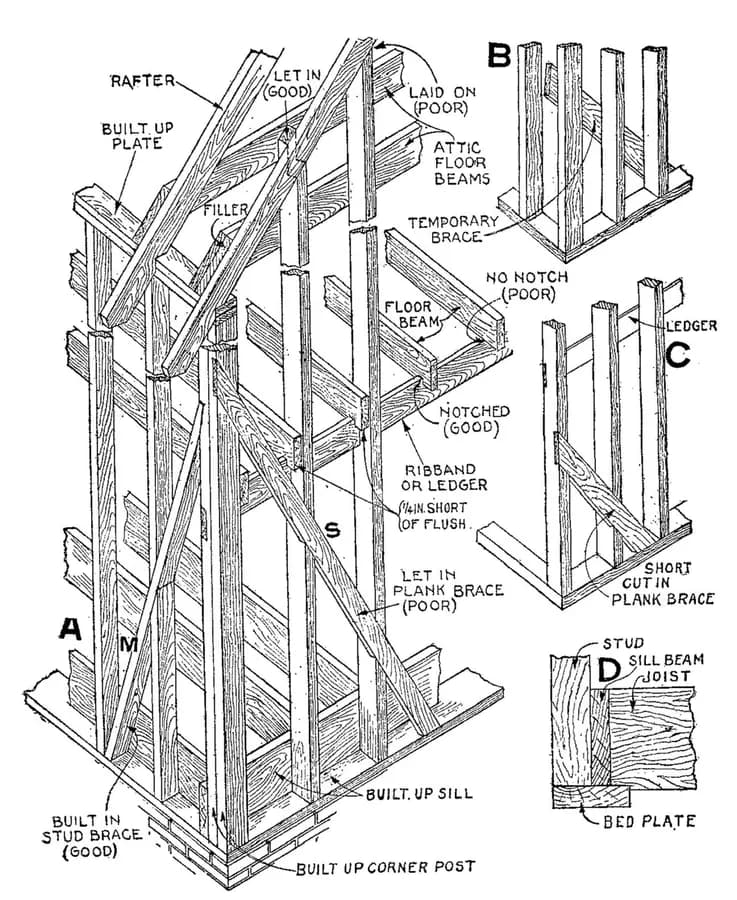
How a house is framed
Why moving a wall needs a plan
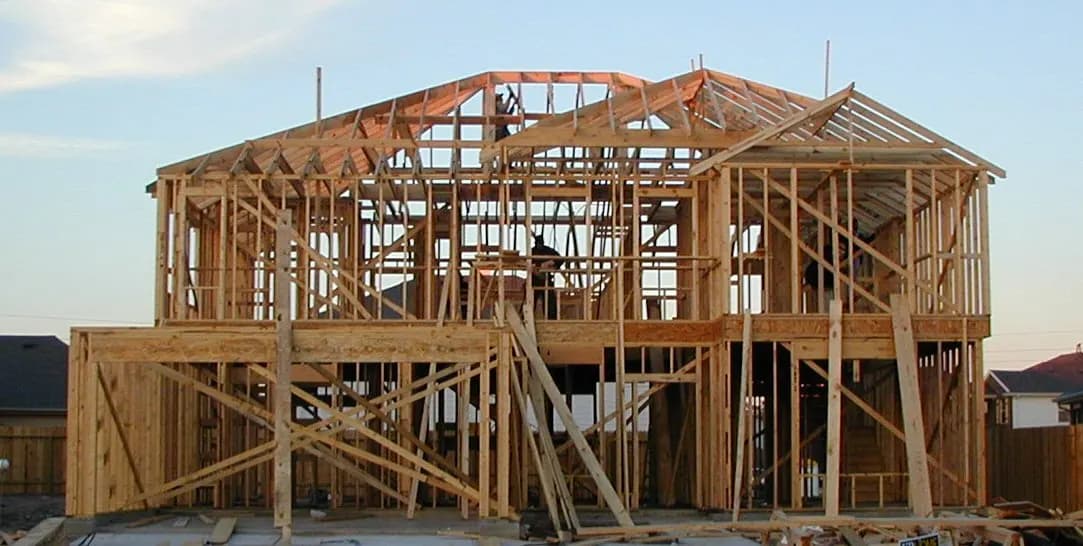
Wood framing
Ask lumber size and spacing
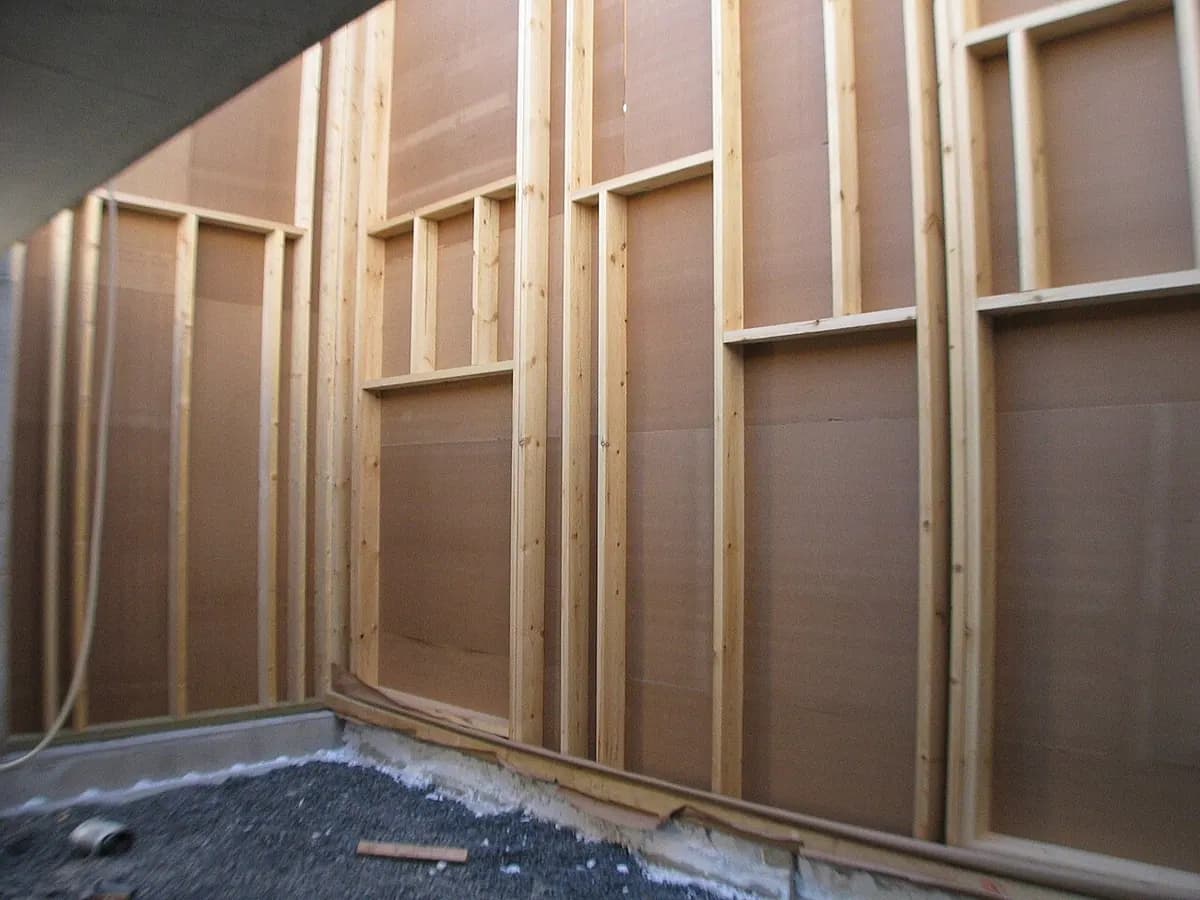
Behind the drywall
Check structure before cutting a wall
Red flags
4 of 11Deck quote with no attachment plan
Ask about footings, lumber and fasteners.
Cutting a possible bearing wall
Ask for an engineer or a plan for the beam.
Lump sum, no drawing
Ask for a drawing and a material list.
Big deposit before materials
Before materials are ordered or permits issued.
7 more red flags
Pressure to sign today, or a price that is only good right now.
A fair quote is still fair tomorrow.
No written quote, or a quote that is a single total with no detail about what is included.
A large payment up front, or a request for cash only.
Some states limit how much a contractor can ask for before work starts.
A license number that does not check out.
Where your state licenses this trade, look the number up yourself on the state licensing board's site.
No proof of insurance.
Ask for a certificate sent to you directly by the insurer or the agent.
A price far below every other quote, followed by extras once the work has started.
Someone who knocks on your door uninvited, or who will not give recent local references.
Where homeowners say it goes wrong
- Projects run weeks or months behind schedule with no proactive communication
- Quotes vary wildly and homeowners can't tell who is reliable vs who will disappear
- They feel unheard - the carpenter doesn't listen to what they actually want and leaves a mess
- Fear of being overcharged or hit with surprise change-order costs once work starts
Ask every carpenter
Who designs the framing (drawings, beam sizes, footing depth), and does the building department review the plan?
What materials and fasteners are you using, and what finish is included?
How do change orders work? Will I get a written price before you do anything beyond the quote?
2 more questions
Are you licensed where this work requires it, and insured? Can I see the license number and a certificate of insurance sent to me by your insurer?
What exactly does the warranty cover, for how long, and who honors it (you, the manufacturer, or both)? Will you put it in writing?
Permit or not?
Commonly permitted
- New decks and stairs
- Moving walls or beams
- Additions
Usually not
- Trim
- Interior doors
- Built-ins
Your building department decides. If a contractor asks you to pull the permit in your own name, ask why.
More on permitsWho pulls it, and what to check first
Some of this work needs a permit and some does not. It depends on the scope of the job and where you live.
New decks and stairs, structural changes (moving walls, beams or openings) and additions commonly need permits and inspections. Trim, interior doors and built-ins usually do not.
- Your building department decides what applies at your address. Rules differ by city and county, and HOA, condo or historic-district rules can add more.
- Ask who pulls the permit. Normally the licensed contractor does and the price includes it. If a contractor asks you to pull it in your own name, ask why: it can shift responsibility for the work to you.
- If you are unsure, call your local building department before you sign. Unpermitted work can cause problems with insurance and when you sell.
Words you'll see
Load-bearing wall
A wall that carries weight from above. It cannot simply be removed. Removing one needs a plan, often an engineer, and a permit.
What this trade covers
14 kinds of jobsAs the trade lists them
- Interior trim and finish carpentry (baseboard, crown molding, door and window casing)
- Custom built-ins, bookcases, window seats, and wainscoting/wall paneling
- Kitchen remodels (cabinet install, countertops coordination, full gut-and-rebuild)
- Bathroom remodels and curbless/walk-in shower conversions
- Door installation and hanging (prehung, slab, pocket, and barn doors)
- Deck building, deck repair, and rotted joist/post/ledger replacement
- Framing and structural repair (sister joists, headers, wall framing, subfloor)
- Basement finishing and attic conversions
- Stair construction and repair (treads, risers, railings, balusters, newel posts)
- Window and exterior door replacement, including rough opening framing
- Cabinet refacing, modification, and custom cabinetry
- Closet systems, pantry shelving, and mudroom built-ins
- Wood rot repair, fascia/soffit replacement, and exterior trim
- Aging-in-place modifications (grab bars, wider doorways, ramps, no-step entries)
How people describe itUrgent calls and planned ones
When it can't wait
- “My deck is pulling away from the house and I'm scared it's going to collapse”
- “There are people on my deck right now and it just dropped a few inches”
- “My stairs gave out and someone could fall through”
- “There's a hole in my floor and you can see straight down into the basement”
- “A tree branch came through my roof and there's a big hole in the framing”
- “My exterior door got kicked in during a break-in and won't lock or close”
- “The floor in my bathroom is soft and sinking like it's going to give way”
- “A support beam in my basement is cracked and the floor above is sagging”
- “My railing is completely loose and my elderly mother almost fell down the stairs”
- “Water is coming in and the wood around my window rotted through to the inside”
When it can be planned
- “I'd like a quote to remodel my kitchen”
- “Looking to add crown molding and new baseboards in my living room”
- “I want to build a deck off my back patio this spring”
- “Can someone come measure for custom built-in bookshelves?”
- “We're thinking about finishing our basement”
- “I need a price on replacing all the interior doors in my house”
- “Interested in an ADU or in-law suite addition”
- “My cabinets are dated and I want to reface or replace them”
Paying for it
Before you finance anything6 basics, then the financing guide
Most home projects can be paid in cash or financed. A few basics before you sign anything:
- Ask for the cash price and the financed price in writing, for the same scope of work. They can differ, because a financing fee (sometimes called a dealer fee) may be built into the financed price.
- Compare the total you will pay over the whole loan, not just the monthly payment.
- Read the fine print on same-as-cash and zero-interest offers, especially what happens if the balance is not paid in full by the end of the promotional period.
- PACE financing is repaid through your property tax bill and can place a lien on your home. Read the terms closely, and consider asking your mortgage servicer how it is treated, before you agree.
- Utility and state programs sometimes offer low-rate loans for efficiency work. Check yours before accepting the contractor's offer.
- Take loan paperwork home and read it. A sign-it-today loan is a reason to slow down.
There is more in the financing guide.financing guide
We are not a lender and do not arrange loans. Financing information here is general education; lenders decide terms.
What an expert knows
Short notes from public sources such as federal agencies, safety groups and trade associations. Each note links to the page it came from, and every page was opened and read on 2026-10-03. This is a starting point, not a complete list of every rule or program, and it is general information, not legal, tax, engineering or insurance advice. Rules and prices vary by place, so confirm what applies at your address.
Types, pros, cons and lifespan5 notes, each with its source
- Pressure-treated or naturally durable lumber: Deck lumber is usually pressure treated with a preservative, or it is a naturally durable wood such as redwood or western redcedar, because decks face weather that shrinks and swells the wood and invites decay and insects.USDA Forest Products Laboratory: Finishes for Wood Decks (opens in a new tab)
- Copper-based or other preservatives: Copper-based treatments such as ACQ, CA-B and MCA usually do not include a water repellent, while some copper-free formulations do. Cut ends made during construction should be treated again.USDA Forest Products Laboratory: Finishes for Wood Decks (opens in a new tab)
- Penetrating finishes: The Forest Products Laboratory recommends penetrating finishes, such as water-repellent preservatives and semitransparent stains, over film-forming paint or solid stain on decks.USDA Forest Products Laboratory: Finishes for Wood Decks (opens in a new tab)
- Colored versus clear finishes: Adding pigment makes a finish last much longer. An uncolored water-repellent preservative may last less than a year, while a colored one can last many years if foot traffic is light.USDA Forest Products Laboratory: Finishes for Wood Decks (opens in a new tab)
- The ledger connection: The ledger is the deck rim board fastened to the house. It should be positively connected to the house's floor structure with bolts or lag screws, not nails alone.American Wood Council: Is Your Deck Safely Connected to Your House? (opens in a new tab)
Sizing and choosing4 notes, each with its source
- Design load: Residential codes have long set a deck live load of 40 pounds per square foot. By that rule, a 14 by 28 foot deck is designed for about 98 people.American Wood Council: Is Your Deck Safely Connected to Your House? (opens in a new tab)
- Anchored to the house: Every edition of the International Residential Code since 2000 requires decks to be positively anchored to resist both vertical and lateral loads.American Wood Council: Is Your Deck Safely Connected to Your House? (opens in a new tab)
- Use the prescriptive tables: AWC's deck guide gives fastener spacing and sizes for ledgers. It is based on the 2015 IRC, and all construction must be approved by the local authority.American Wood Council: Prescriptive Residential Wood Deck Construction Guide (DCA 6) (opens in a new tab)
- Stairs: If the area behind stair treads is open, the opening should be no more than 4 inches high. Keep stair pathways clear.NADRA: Check Your Deck Consumer Checklist (opens in a new tab)
Maintenance by season5 notes, each with its source
- Spring inspection: Check the ledger board, posts, joists, boards, railings and stairs. Press an ice pick or screwdriver into damp areas. If it sinks in easily or the wood is soft and spongy, decay may be present.NADRA: Check Your Deck Consumer Checklist (opens in a new tab)
- Flashing: Flashing directs water out and away from where the deck meets the house. Check that it is intact so moisture and debris do not collect at the ledger.NADRA: Check Your Deck Consumer Checklist (opens in a new tab)
- Fall cleanup: Clear leaves and debris, which are slippery and promote mildew. If mildew is present or the coating has worn away, clean the deck and apply a new waterproofing coating.NADRA: Check Your Deck Consumer Checklist (opens in a new tab)
- Re-coat on a schedule: Without upkeep, wood decks develop cracks, raised grain and mildew. Penetrating finishes are easier to reapply than film-forming ones.USDA Forest Products Laboratory: Finishes for Wood Decks (opens in a new tab)
- Railings and trees: Make sure railings are firmly held, and check that overhanging tree limbs will not break free onto the deck.NADRA: Check Your Deck Consumer Checklist (opens in a new tab)
Code and permit basics5 notes, each with its source
- When a permit is needed: Permits are generally required for new structures, alterations, repairs or additions to existing buildings, and for changes to electrical, mechanical and plumbing systems. Ask your local code official before you start. This is general information, not legal advice.FEMA Building Codes Toolkit: Checklist to Acquire a Building Permit (opens in a new tab)
- Inspections: Inspectors check the finished work against the permit, local code and approved plans. Plan on a few inspections, and review that approvals are actually secured.FEMA Building Codes Toolkit: Checklist to Acquire a Building Permit (opens in a new tab)
- Ledger rules: Nail-only ledger connections are a leading reason decks collapse, and the code does not allow nails to carry the load by withdrawal.American Wood Council: Is Your Deck Safely Connected to Your House? (opens in a new tab)
- Unpermitted work: Code inspectors list building without permits among the most common violations homeowners make.ICC: 7 Things Code Inspectors Wish Homeowners Knew (opens in a new tab)
- Pre-1978 homes: Anyone paid to disturb painted trim or surfaces in a home built before 1978 must be certified in lead-safe work practices.EPA: Lead Renovation, Repair and Painting Program (opens in a new tab)
What moves the price4 notes, each with its source
- Structure and connections: Footings, posts, ledger hardware and flashing are the parts that keep a deck safe, so ask what is included for each.American Wood Council: Is Your Deck Safely Connected to Your House? (opens in a new tab)
- Wood choice and finish: Pressure-treated lumber, naturally durable woods and the finish you pick all change cost and upkeep.USDA Forest Products Laboratory: Finishes for Wood Decks (opens in a new tab)
- Plans, permit and fees: A significant project can need a design professional and a signed and sealed set of plans, plus an application form and fee.FEMA Building Codes Toolkit: Checklist to Acquire a Building Permit (opens in a new tab)
- Number of inspections: The code official tells you roughly how many inspections the project needs, which affects scheduling.FEMA Building Codes Toolkit: Checklist to Acquire a Building Permit (opens in a new tab)
Common scams4 notes, each with its source
- Asked to pull the permit yourself: FEMA's contractor checklist says a contractor who asks you to get the permit is likely unlicensed or unqualified.FEMA Building Codes Toolkit: Checklist to Ask Your General Contractor (opens in a new tab)
- Door-knocking crews: Uninvited workers who say they are in the area, or offer leftover material, are a common home repair scam.FTC: How To Avoid a Home Improvement Scam (opens in a new tab)
- Cash only, pay in full: Never pay the full cost before the project is complete, and avoid cash or wire payments.FEMA Building Codes Toolkit: Checklist to Ask Your General Contractor (opens in a new tab)
- Blank contracts: Do not sign a contract with blank spaces. Fill in the work, price and dates first.FTC: How To Avoid a Home Improvement Scam (opens in a new tab)
Ask for this in writing4 notes, each with its source
- Ledger attachment and flashing: How the deck will be attached to the house, with what fasteners, and how the ledger will be flashed.American Wood Council: Is Your Deck Safely Connected to Your House? (opens in a new tab)
- Permit and inspections: That the contractor will obtain the permit and coordinate the inspections, and that you can be present for them.FEMA Building Codes Toolkit: Checklist to Ask Your General Contractor (opens in a new tab)
- Written warranty: What is covered, what is not and for how long. FEMA's checklist says at a minimum one year on work and materials, with two years preferred.FEMA Building Codes Toolkit: Checklist to Ask Your General Contractor (opens in a new tab)
- Payment schedule: Payments set in the contract before work starts, with part held back until the work is finished to your satisfaction.FEMA Building Codes Toolkit: Checklist to Ask Your General Contractor (opens in a new tab)
Repair or replace3 notes, each with its source
- Test for soft wood: Probe damp areas with a screwdriver. Soft, spongy wood, small insect holes or a failing ledger point to repair or replacement.NADRA: Check Your Deck Consumer Checklist (opens in a new tab)
- Nail-only ledger is a red flag: A deck attached to the house only by nails is described as potentially dangerous and should be checked by a professional.American Wood Council: Is Your Deck Safely Connected to Your House? (opens in a new tab)
- Get an inspector for an older deck: NADRA recommends an ASHI-certified home inspector or a knowledgeable deck builder for older decks.NADRA: Deck Safety Tips for Homeowners (opens in a new tab)
Questions to ask an expert4 notes, each with its source
- How will the ledger be attached and flashed? Look for bolts or lag screws, not nails alone.American Wood Council: Is Your Deck Safely Connected to Your House? (opens in a new tab)
- Which permits and inspections apply? Ask who schedules them, and whether you can be there.FEMA Building Codes Toolkit: Checklist to Ask Your General Contractor (opens in a new tab)
- Which finish do you recommend and how often will I need to redo it? Ask about penetrating finishes and recoat timing.USDA Forest Products Laboratory: Finishes for Wood Decks (opens in a new tab)
- Will you be present for the inspections? FEMA recommends the homeowner attend too.FEMA Building Codes Toolkit: Checklist to Ask Your General Contractor (opens in a new tab)
General information, not legal, tax, engineering or insurance advice. Photos credited with their licenses; drawings made for this site. Guide updated October 3, 2026.